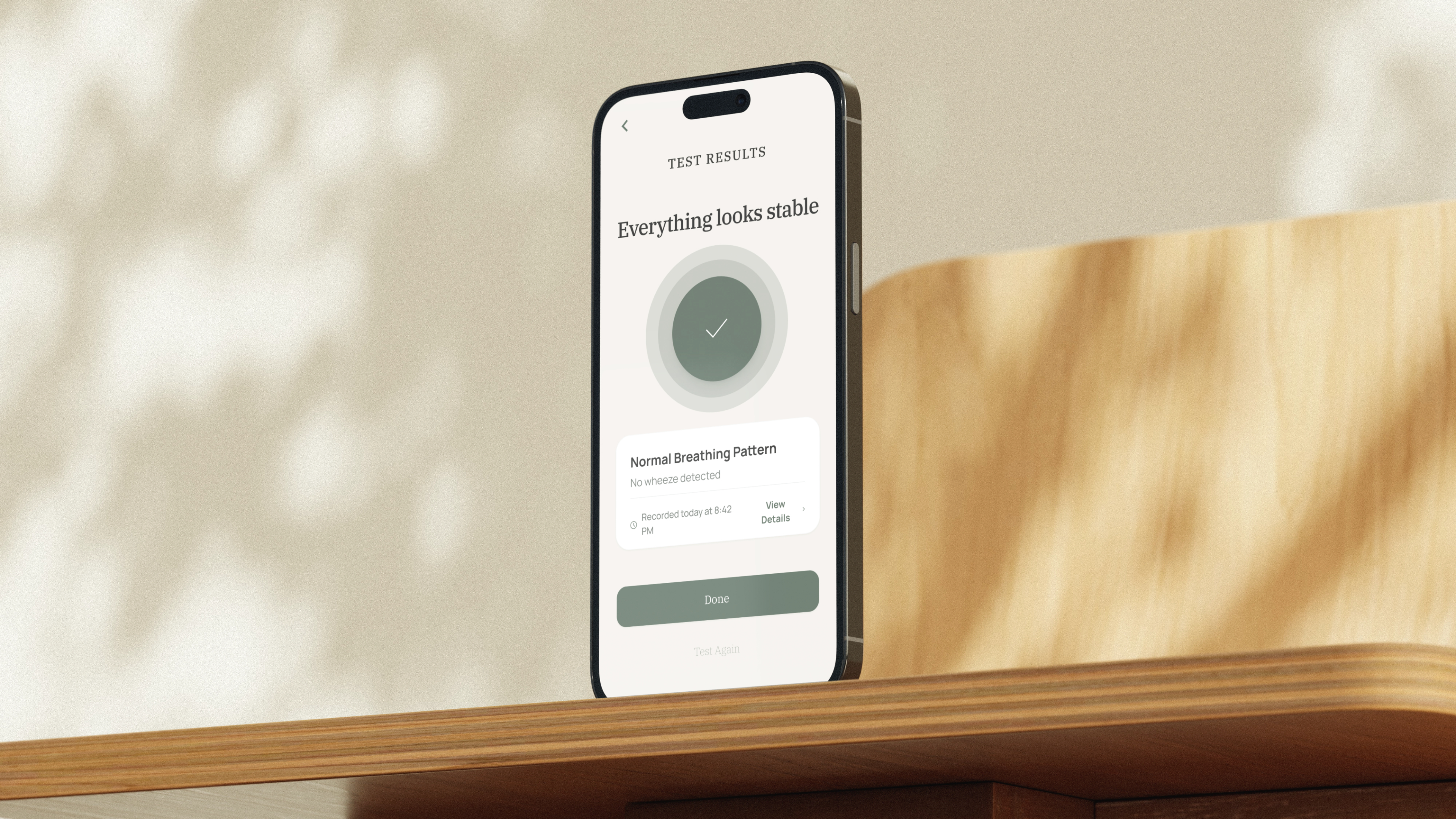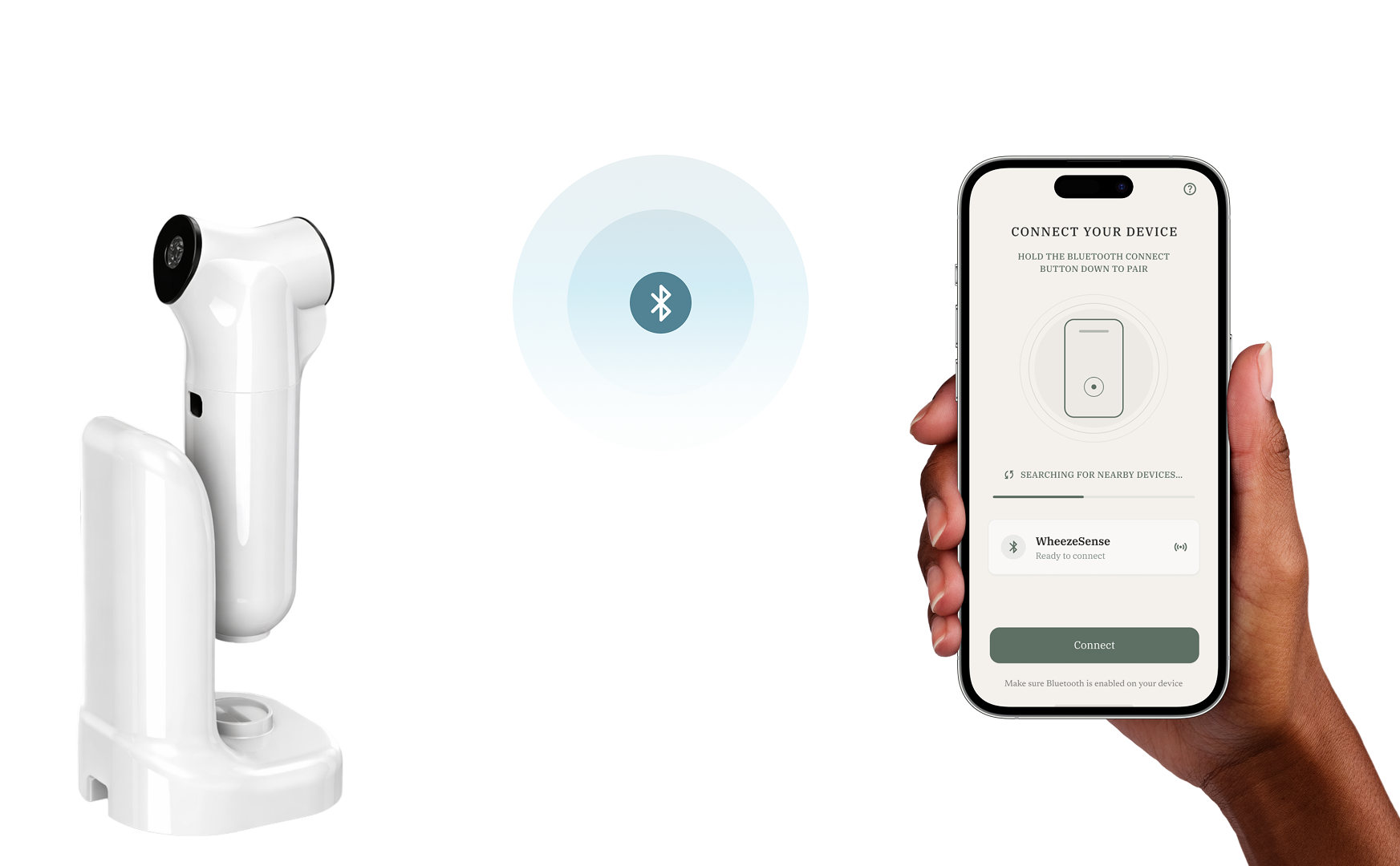
WheezeSense

WheezeSense

A portable wheezing monitor for adults with asthma and COPD.

Interviews & Insights
Research synthesis board
5
Monitors audited across the market
4
Emotional stages in the patient cycle
3
Weeks from discovery to prototype
1
Core gap no existing product fills
"I can't tell if it's serious or just a bad night — the not knowing is worse than the wheezing itself."
Uncertainty & Anxiety
"By the time I see my GP, the symptoms are gone. I have nothing to show them — just my word."
Communication Gap
"The apps give me numbers I don't understand. I just want to know: is this okay or not?"
Interpretation Burden
"Those medical patches feel like I'm a patient 24/7. I just want something normal on my bedside table."
Daily Livability
From symptom to care
Night symptom illustration
Stage 01
Night Symptom
User wakes to wheezing or chest tightness. The episode is real but fleeting — hard to capture, impossible to record in the moment.
Feeling: Alarm → Confusion
Wait and decide illustration
Stage 02
Wait / Decide
Should I call someone? Wait it out? Users lack an objective measure — self-assessment relies on subjective judgment alone, amplifying anxiety.
Feeling: Anxiety → Helplessness
Seek care illustration
Stage 03
Seek Care
By the time they reach a GP, symptoms have often subsided. No data exists to reconstruct what happened overnight.
Feeling: Frustration → Doubt
Explain to clinician illustration
Stage 04
Explain
Patients describe symptoms in vague, subjective terms. Without longitudinal data or recordings, clinicians rely on self-report alone.
Feeling: Dismissed → Unheard
Issues in the market
High Clinical Depth Low Clinical Depth Low Intuitive High Intuitive
Strados RESP
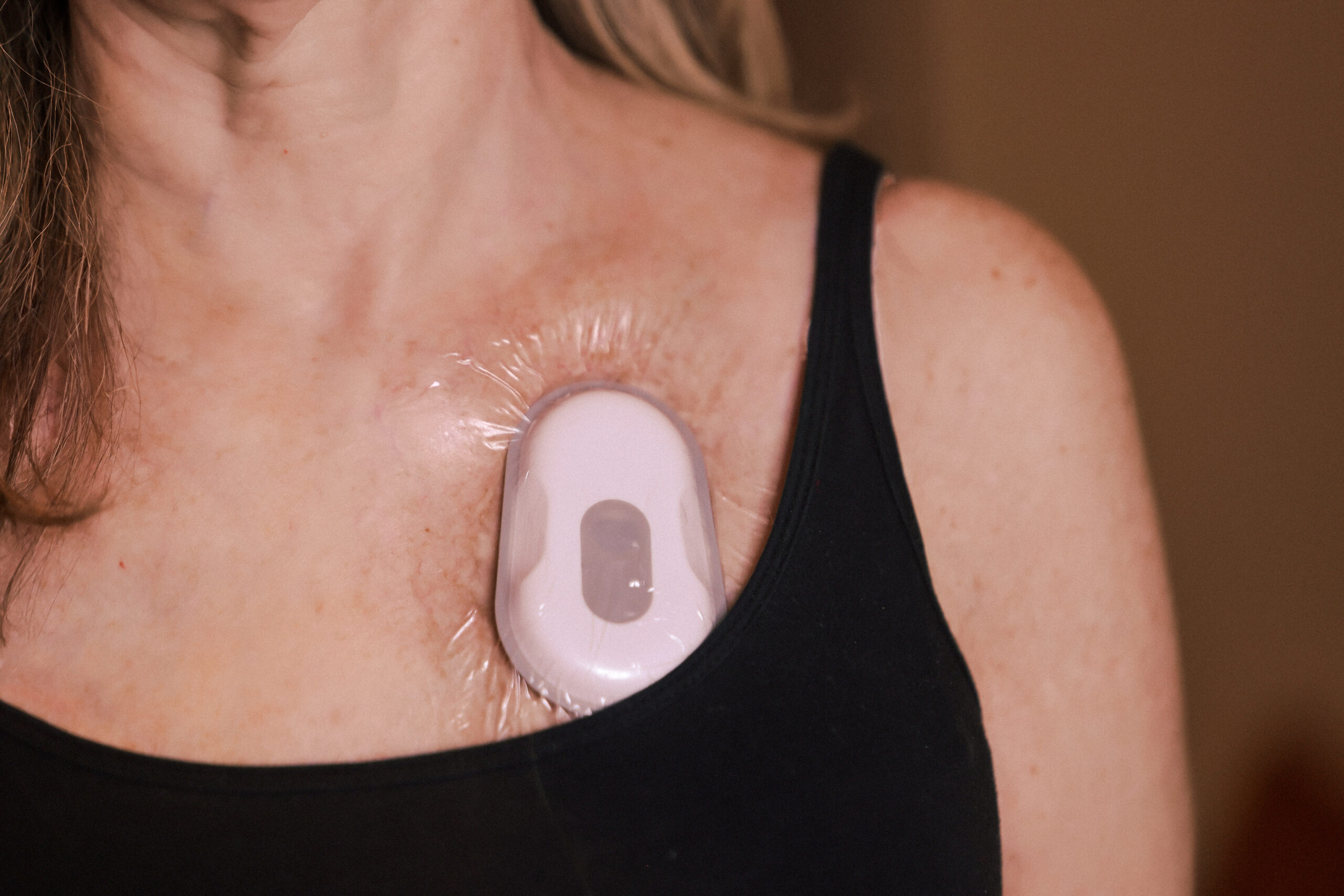
StethX Patch
Neck Monitor
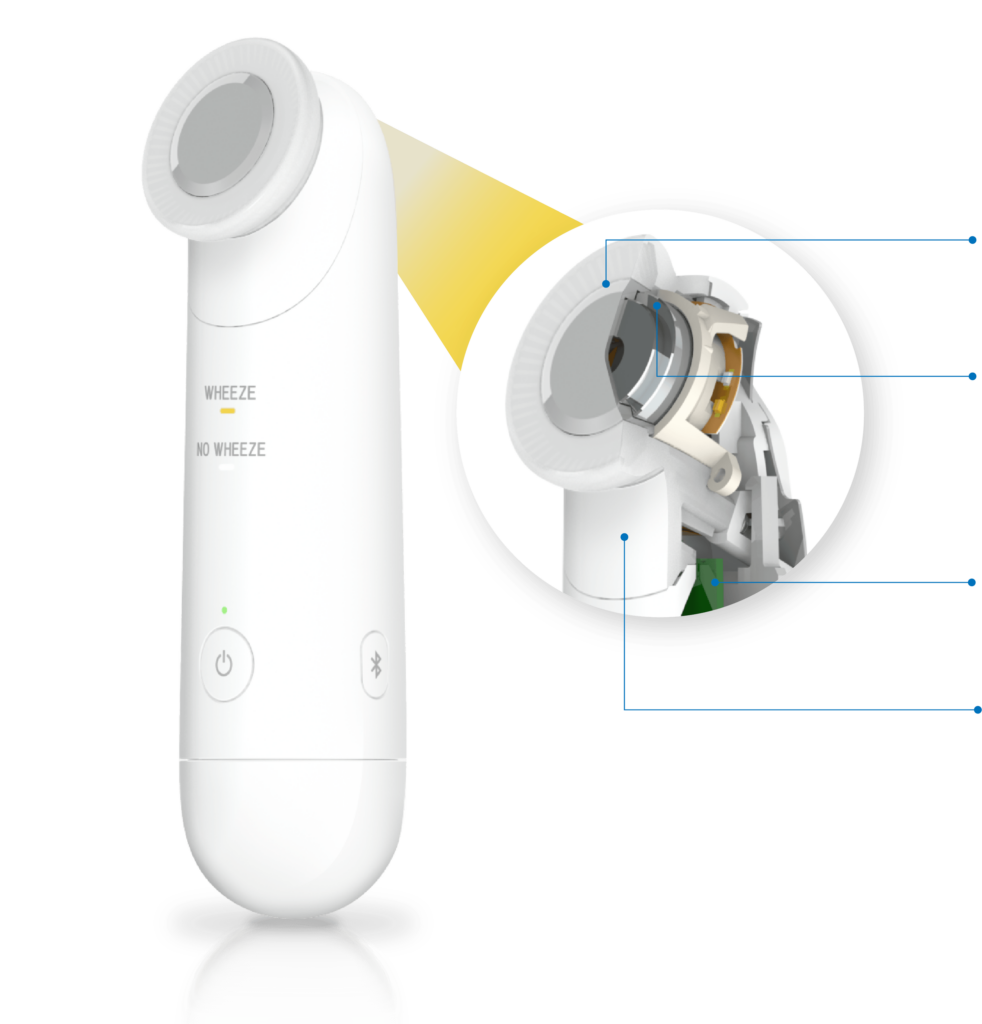
OMRON WheezeScan
WheezeSense ✦
OMRON false positives
OMRON WheezeScan
False positives from single-mic
Single-microphone architecture misclassifies ambient sounds — crying, squealing, TV audio — as wheeze events, eroding user trust.
Uncomfortable for daily use
Strados · StethX · Neck monitors
Uncomfortable for daily use
Chest patches and neck sensors cause wear fatigue. Built for clinical settings, not for everyday home monitoring.
Medical jargon in output
All audited products
Medical jargon in output
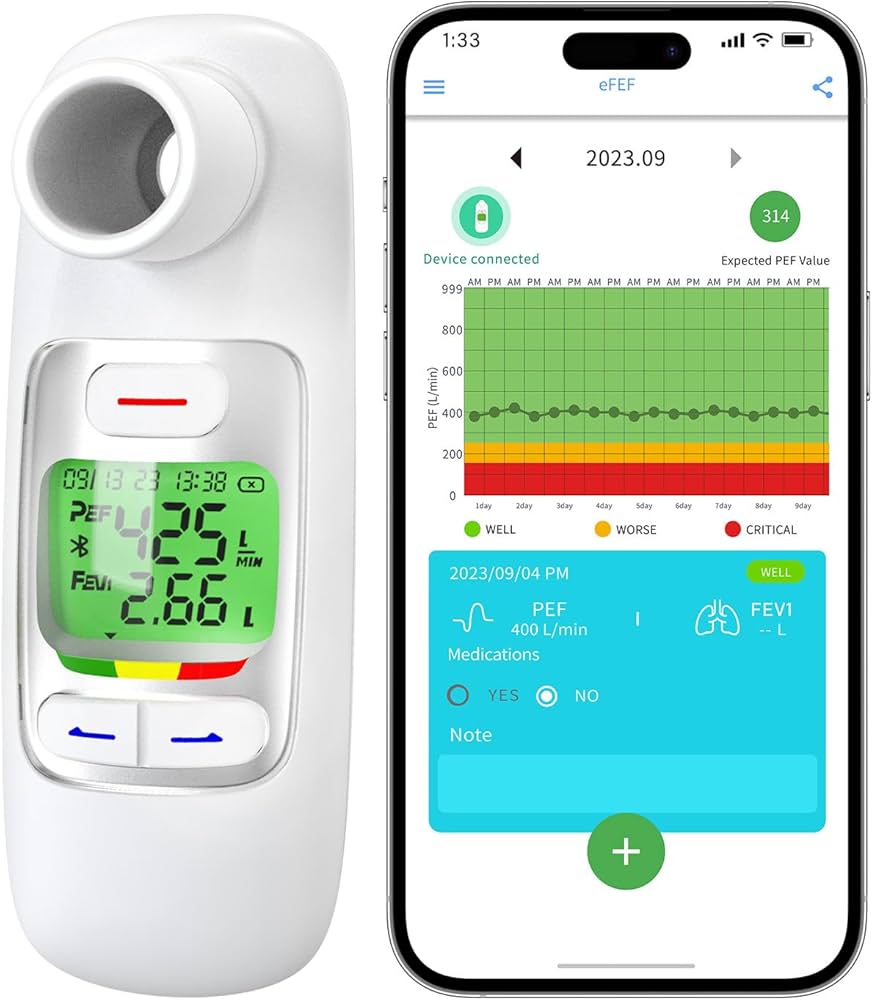
Clinical terminology in app interfaces increases anxiety. Users can't contextualise raw metrics without specialised training.
No intuitive feedback loop
All audited products
No intuitive feedback loop
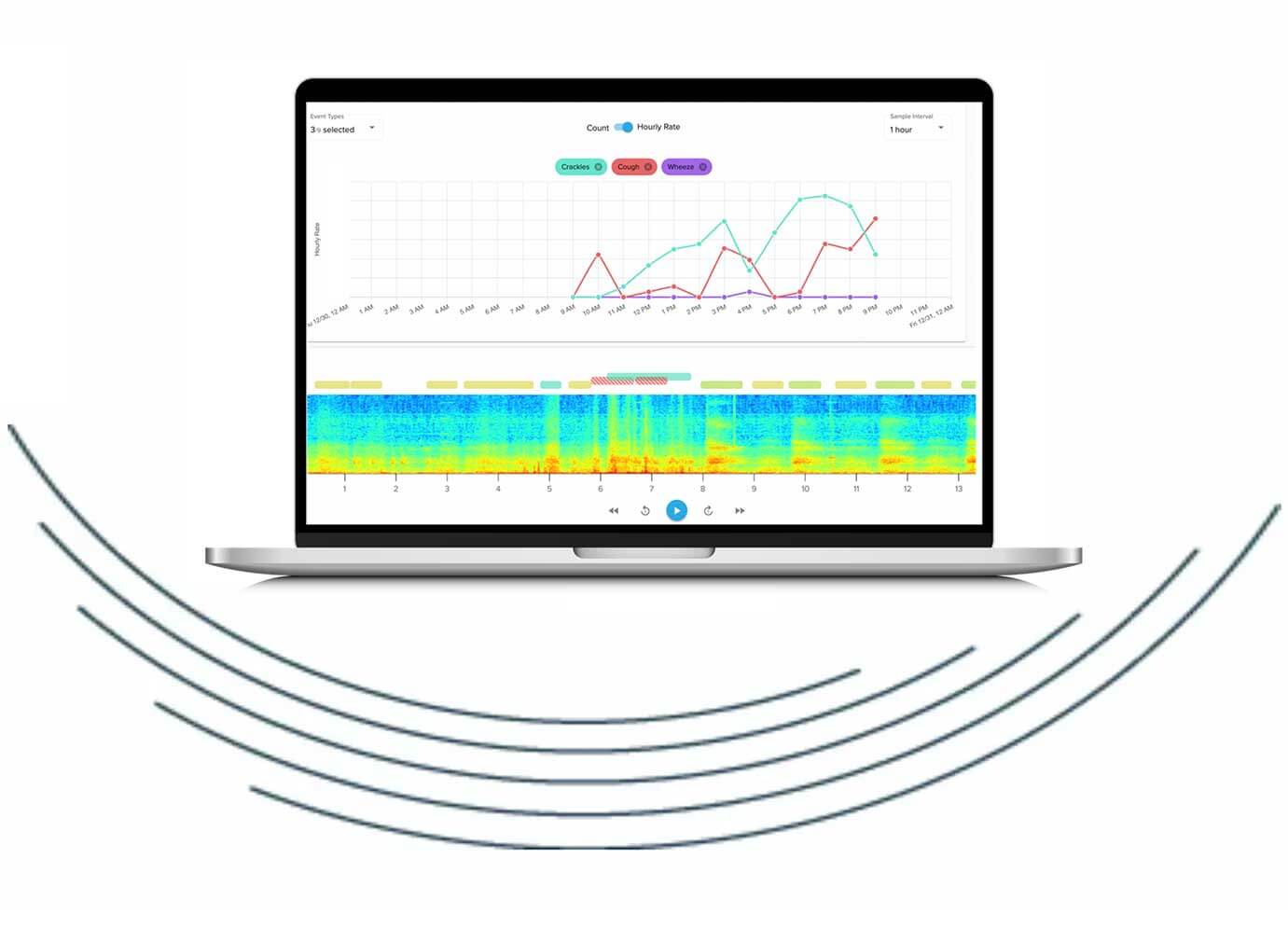
No pathway from raw data to confident action. Isolated readings lack meaning — context and trends are needed to unlock value.
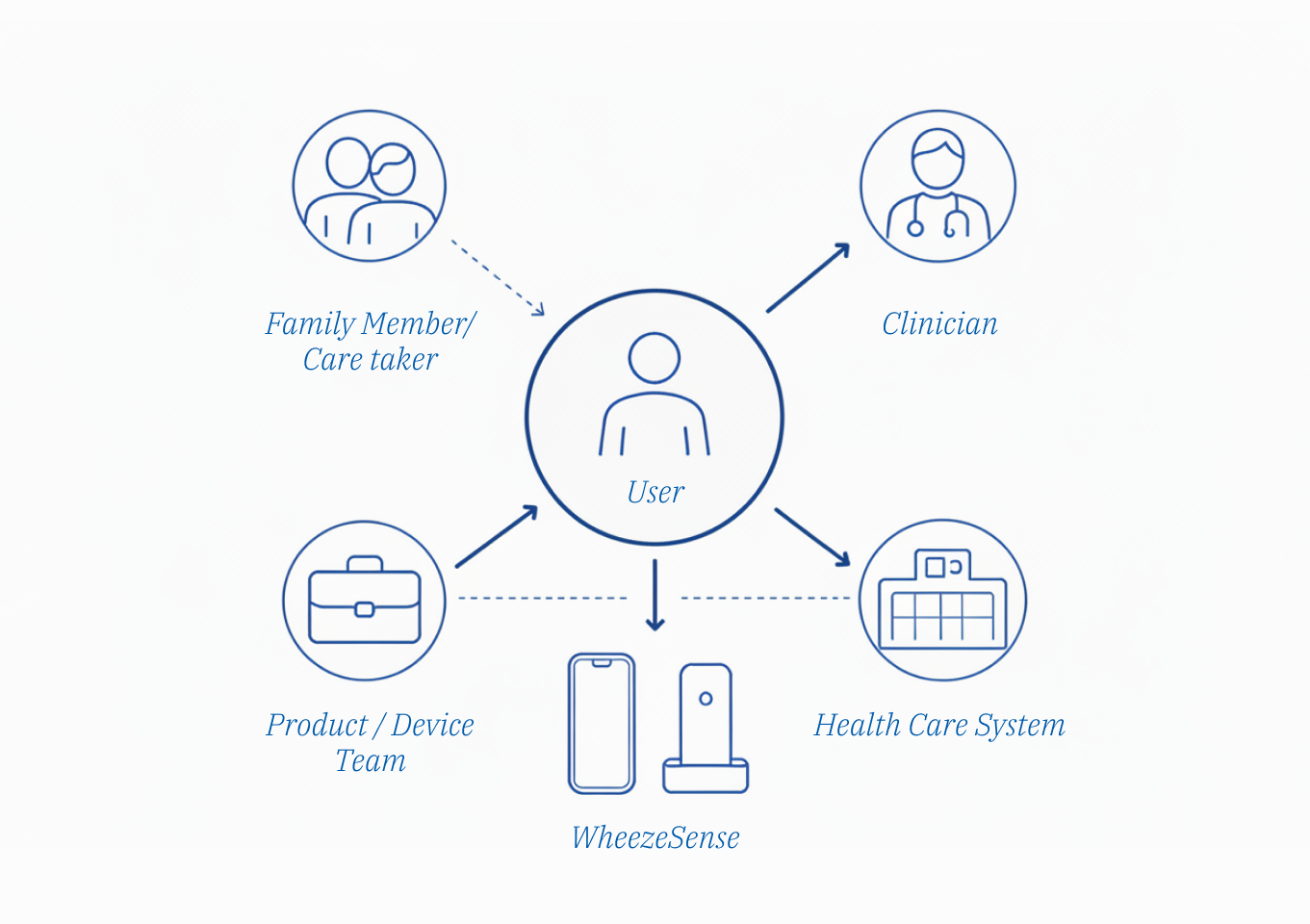
Who's involved
Stakeholder map
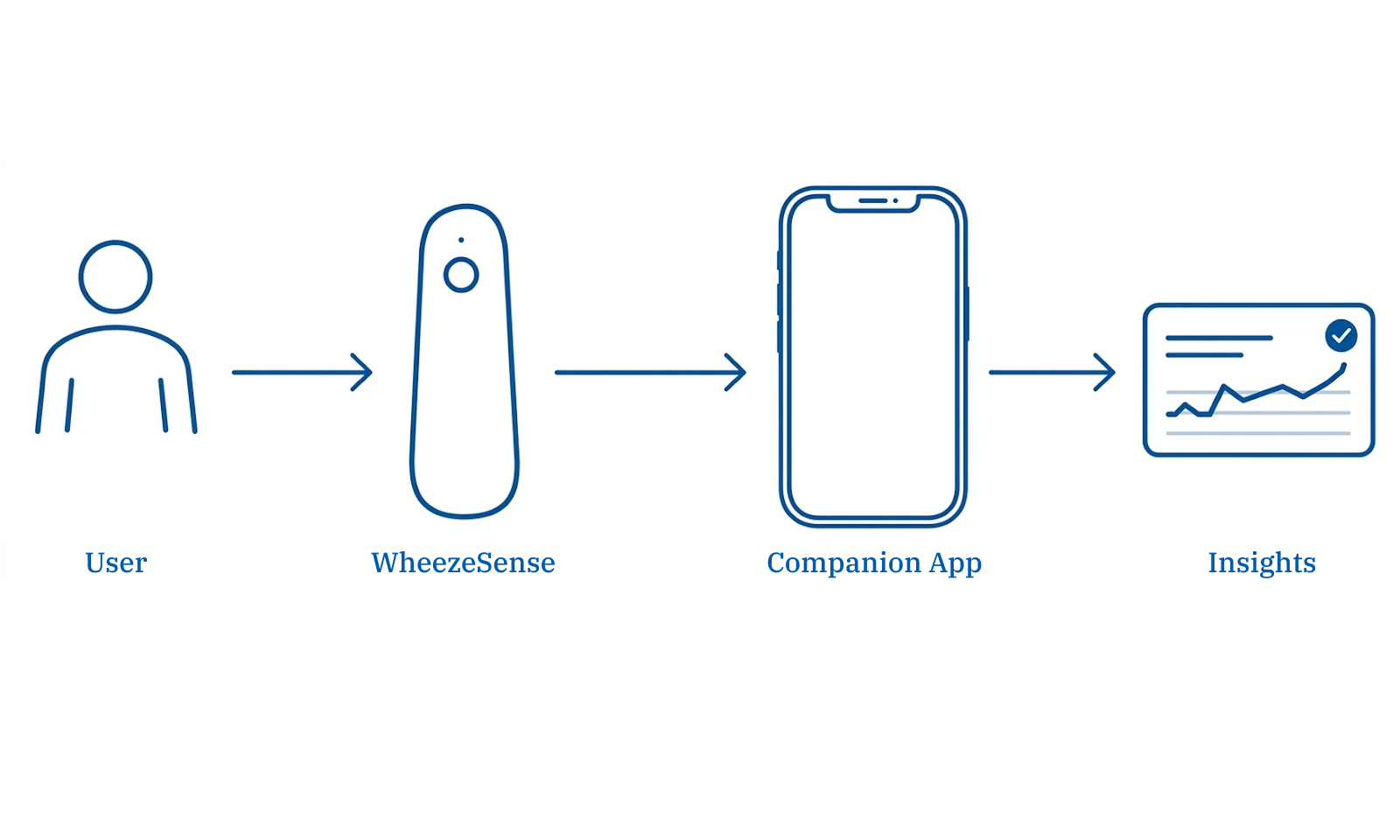
The big picture
Project overview diagram
The problem we're solving
Core Problem Statement

Adults with asthma or COPD struggle not with detecting symptoms — but interpreting and communicating them. Ambiguity causes more anxiety than the symptoms themselves.
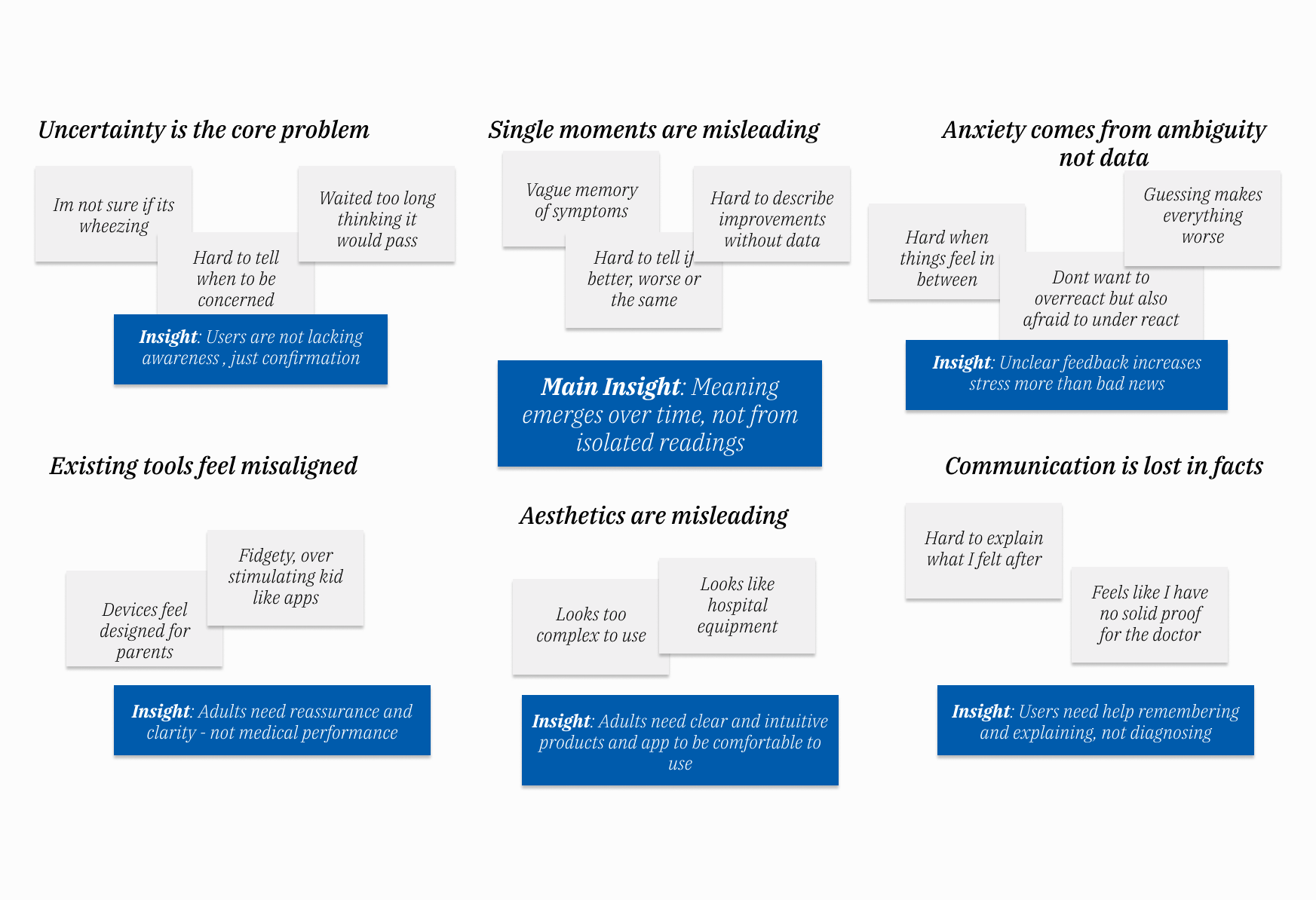
Uncertainty drives anxiety
Interpretation is harder than detection
Isolated readings lack meaning
Context and trends unlock meaning
Calm interpretation wins
Calm feedback beats more data
Adult tools needed
Clinical framing kills daily adoption
Three insight clusters
Cluster 01
Uncertainty is the real symptom
Users report that ambiguity — not the wheeze itself — drives the most anxiety. They can feel something, but can't assess its severity.
"I can't tell if it's serious or just a bad night."
"The not knowing is worse than the wheezing itself."
→ Design must reduce interpretation burden, not add more data.
Cluster 02
Symptoms vanish before the GP visit
Wheezing is episodic and nocturnal. By the time patients reach a clinician, there is no evidence — only subjective recall.
"By the time I see my GP, the symptoms are gone."
"I have nothing to show them — just my word."
→ The system must log and surface longitudinal data passively.
Cluster 03
Clinical tools alienate daily users
Existing products are designed for clinicians, not people. Medical jargon, uncomfortable wearables, and complex UIs prevent daily adoption.
"The apps give me numbers I don't understand."
"Those medical patches feel like I'm a patient 24/7."
→ The device must feel domestic, calm, and non-medical.
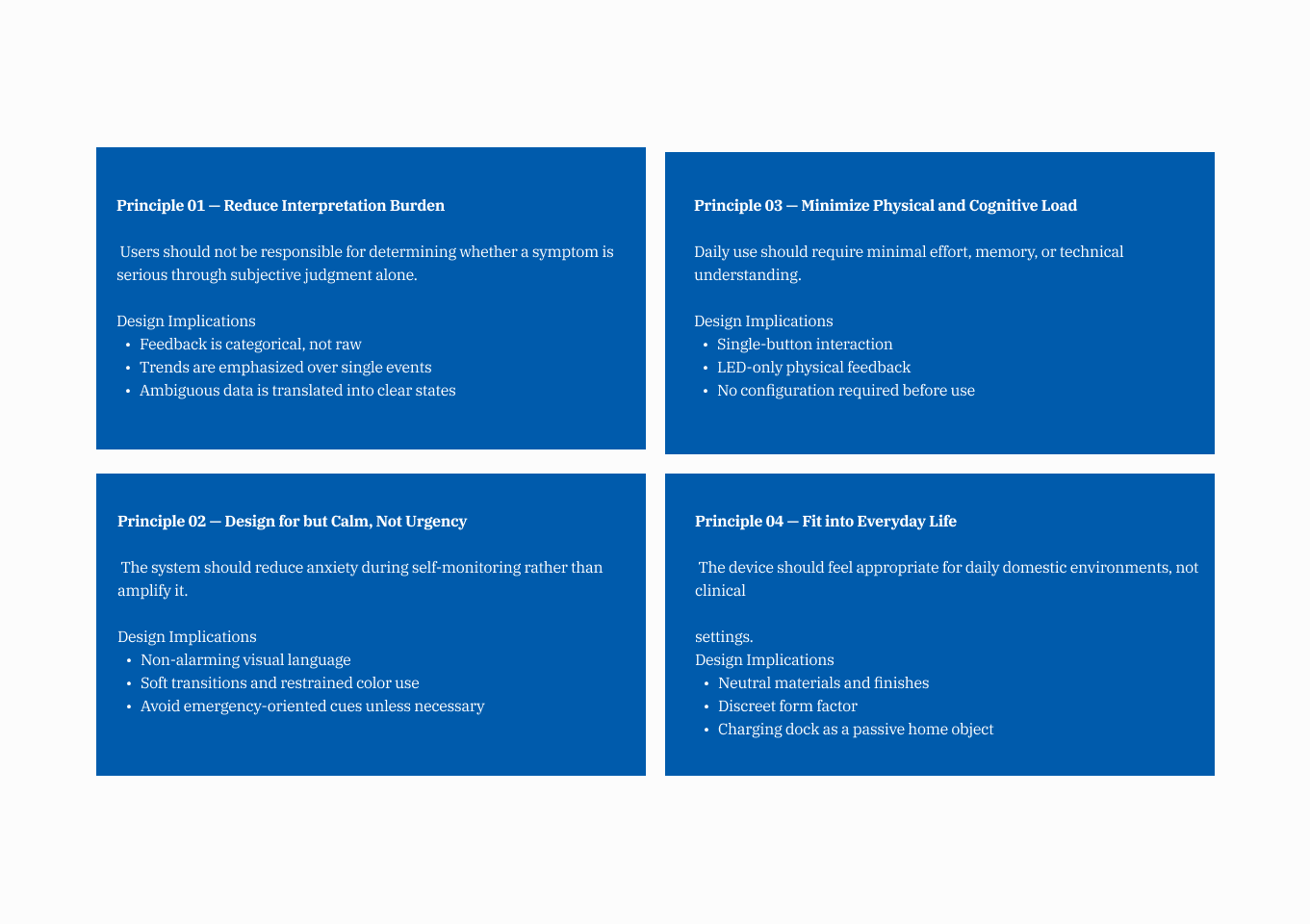
Four rules that shaped everything
Four design principles
How might we…
HMW 01
How might we translate ambiguous respiratory data into calm, confident interpretations?
HMW 02
How might we capture nocturnal symptoms so patients have evidence for their GP?
HMW 03
How might we design a medical device that feels like a personal care object?
HMW 04
How might we eliminate false positives from ambient noise without additional user effort?
HMW 05
How might we provide longitudinal breathing trends without requiring manual logging?
HMW 06
How might we bridge the communication gap between patient experience and clinical consultation?
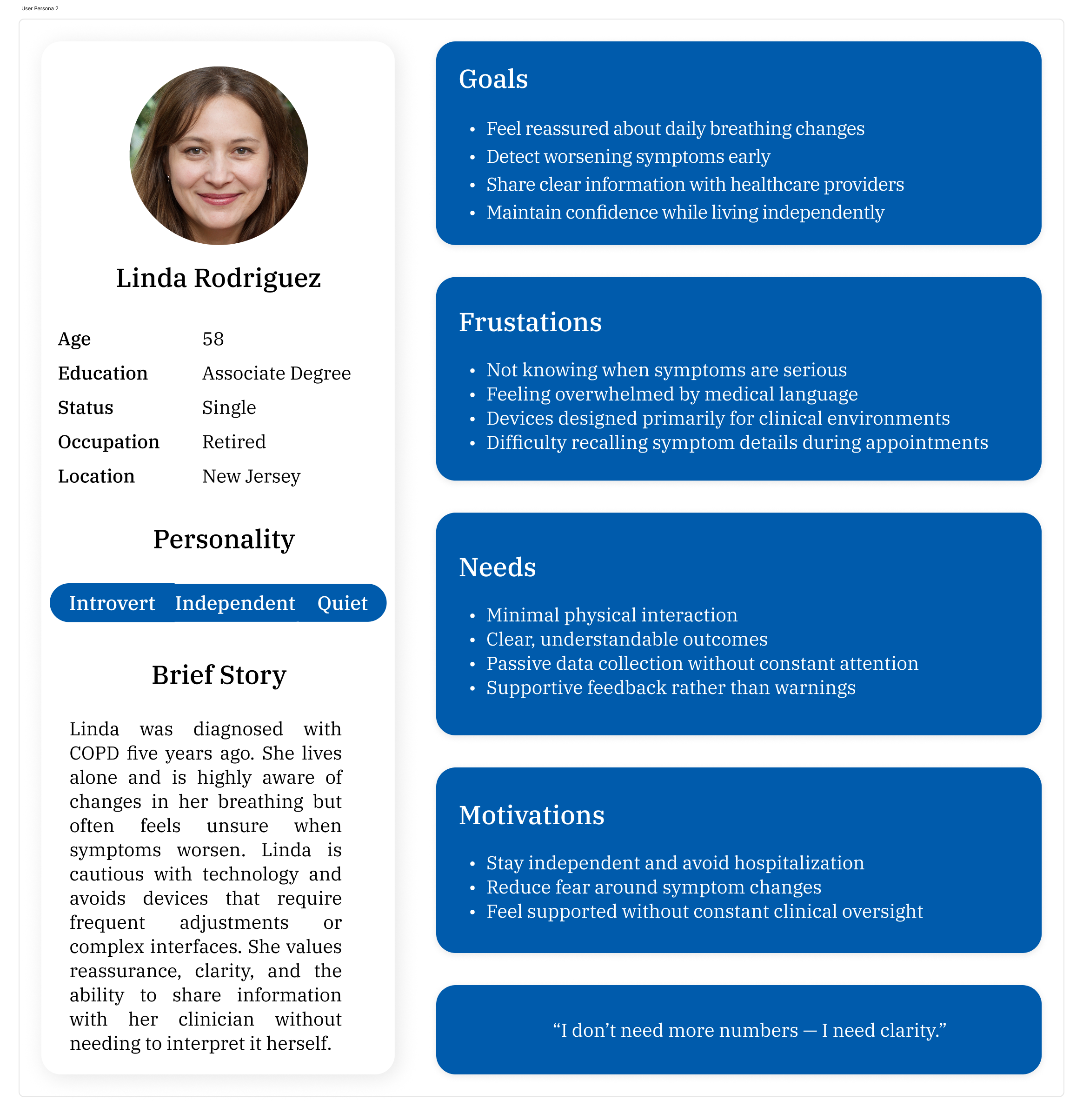
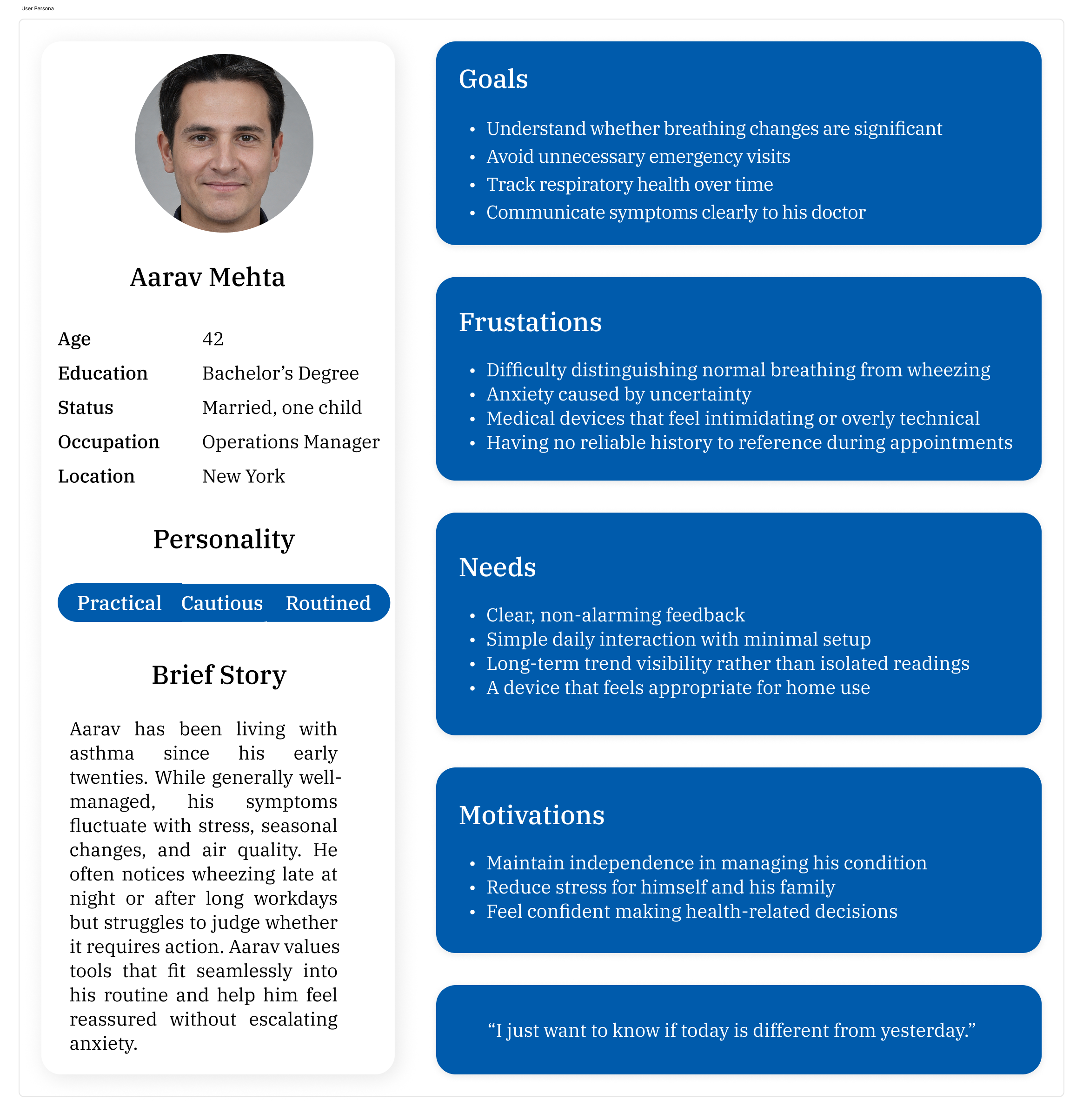
Who we're designing for
User persona 1 User persona 2
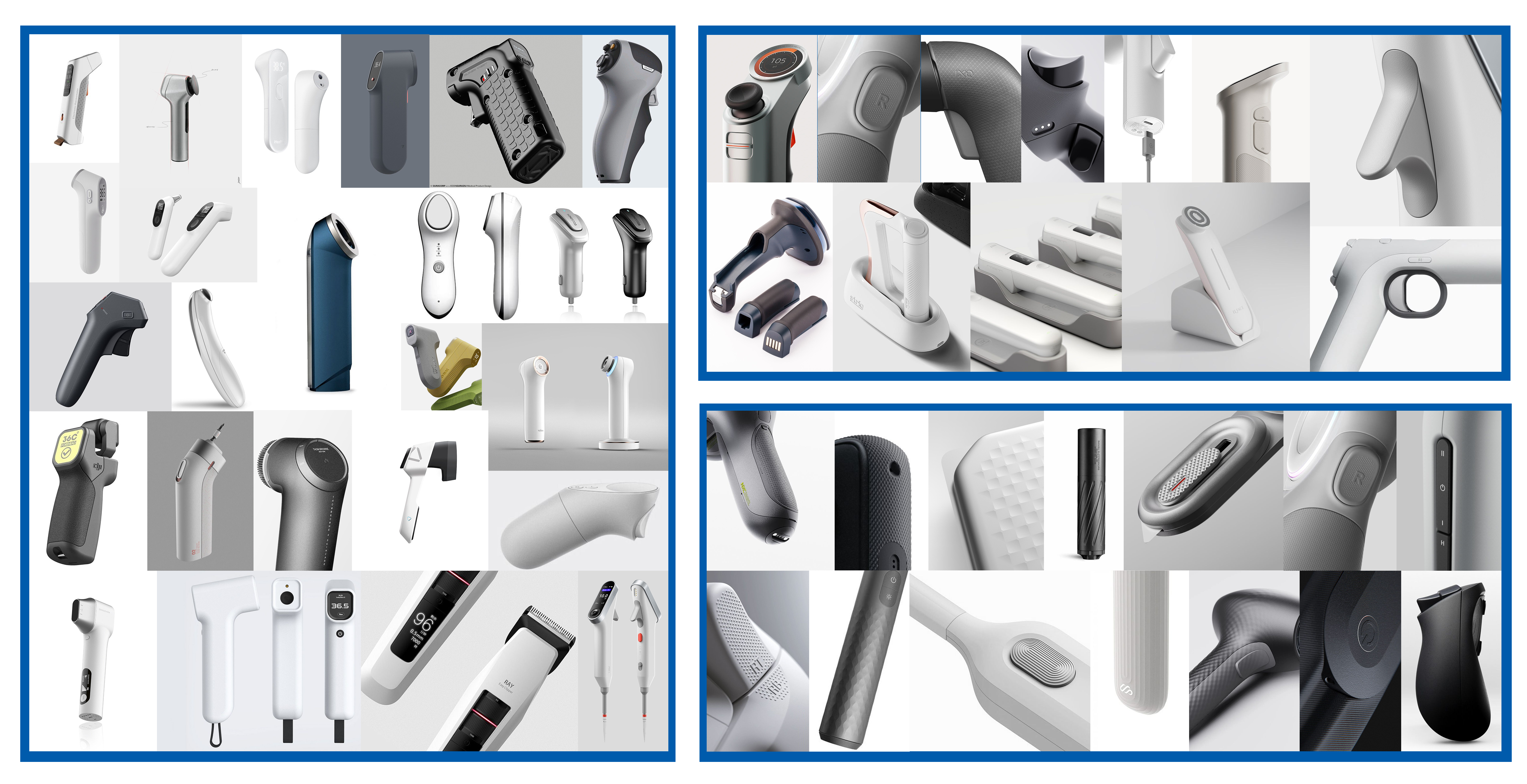
Moodboard
Moodboard
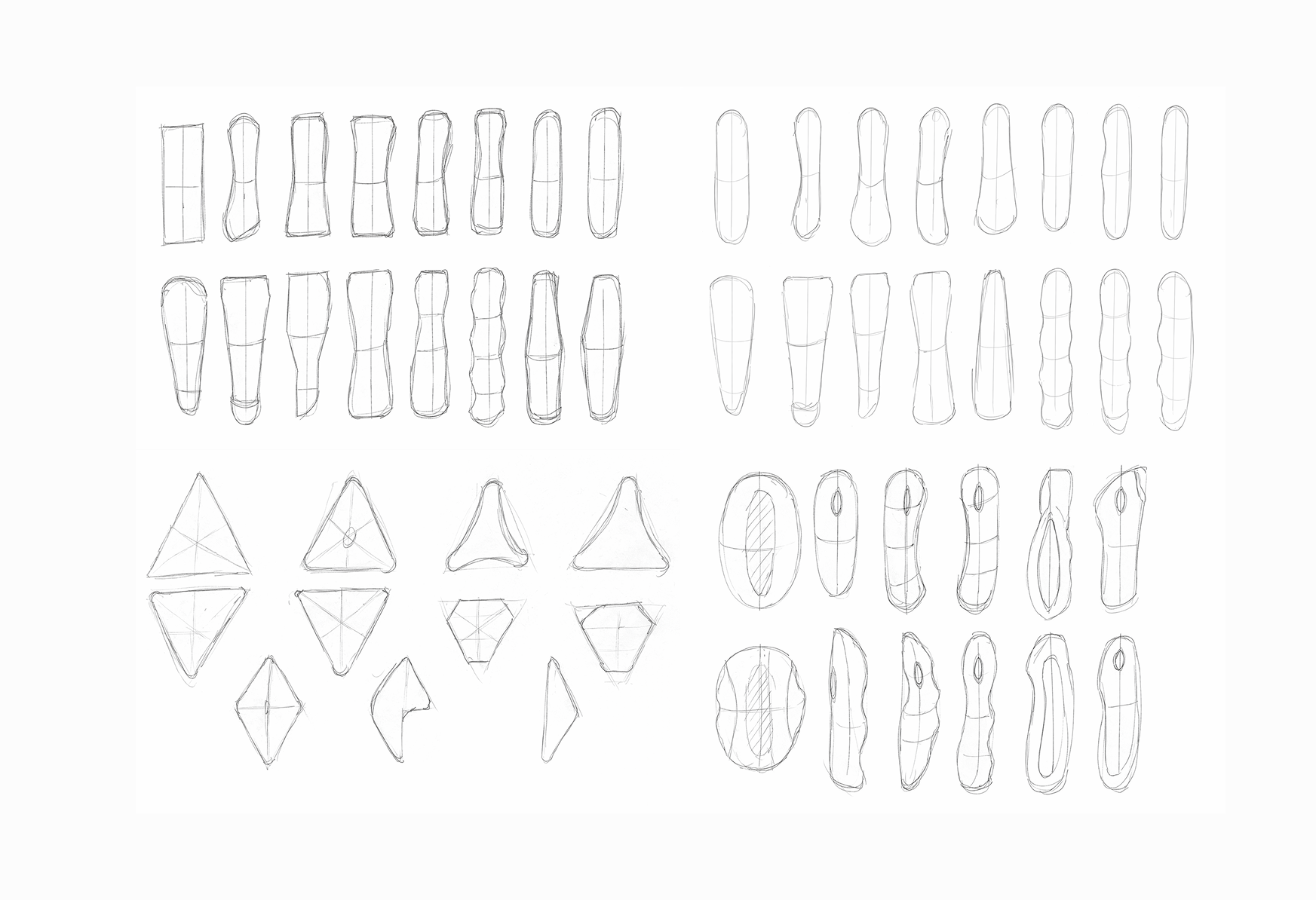
Early form sketches
Form development sketches
Getting the size right
Scale and proportion sketches
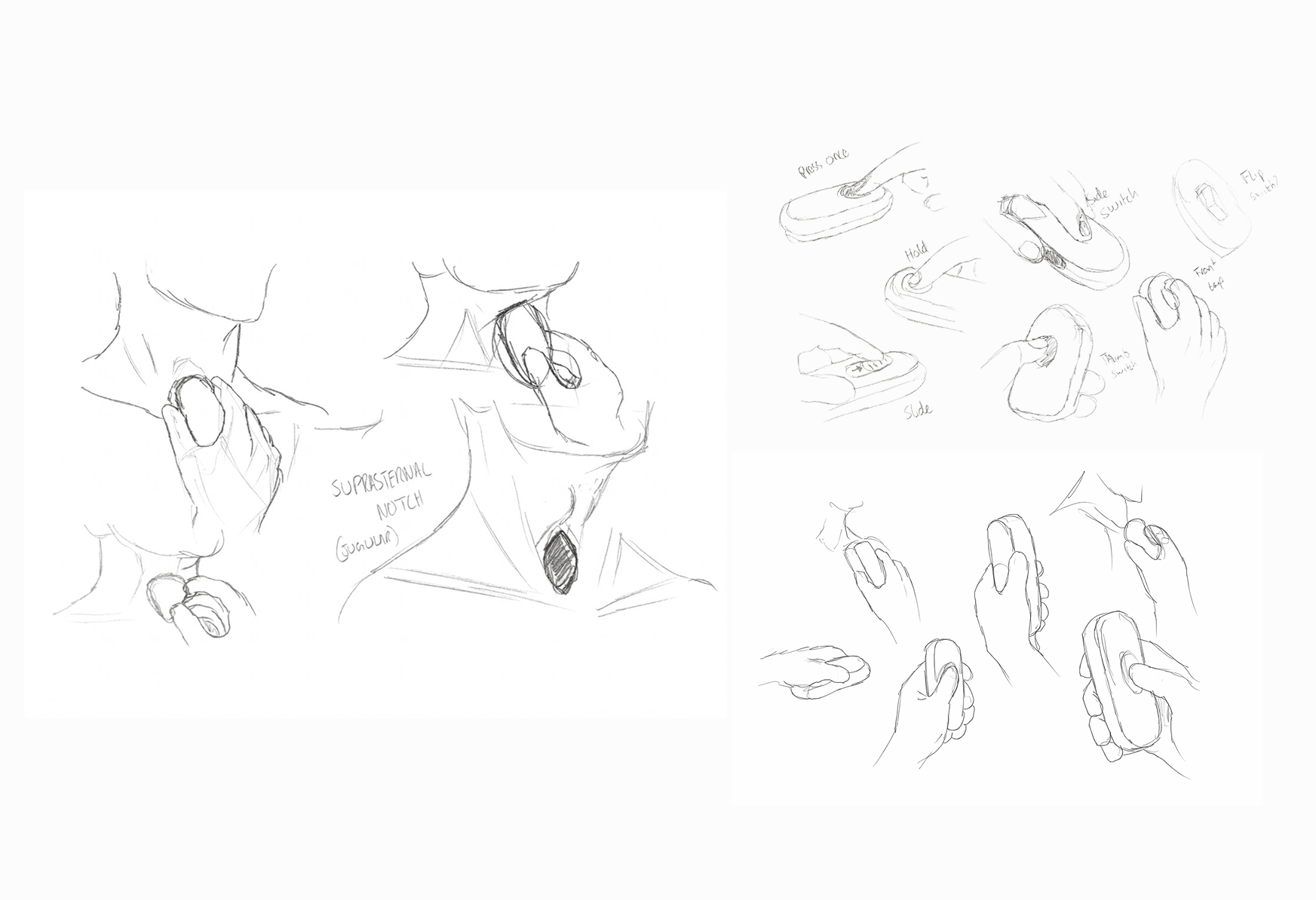
How it's used
Interaction sketches
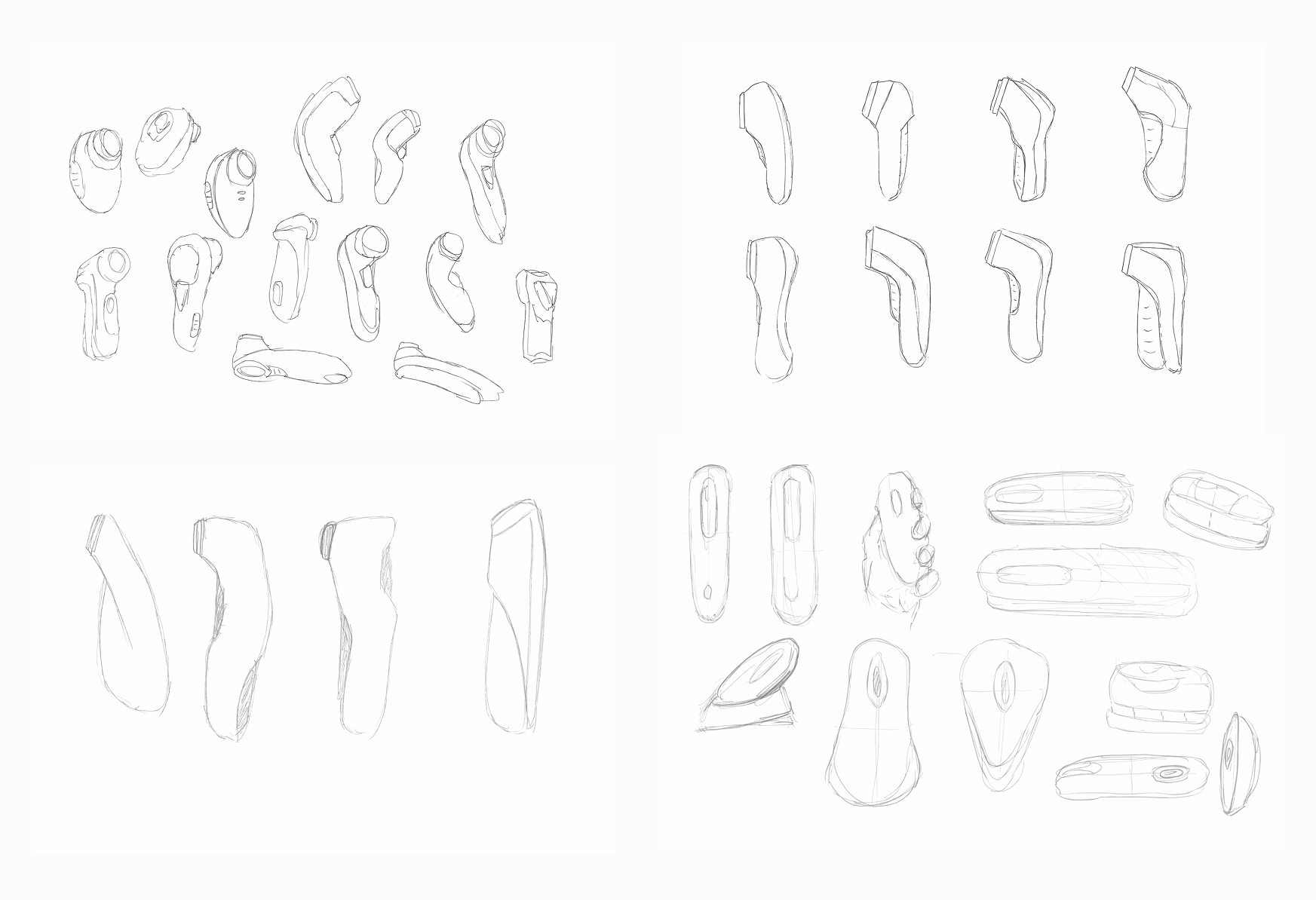
Refined directions
Developed sketches
How it will be used & placed
Placement sketch and testing
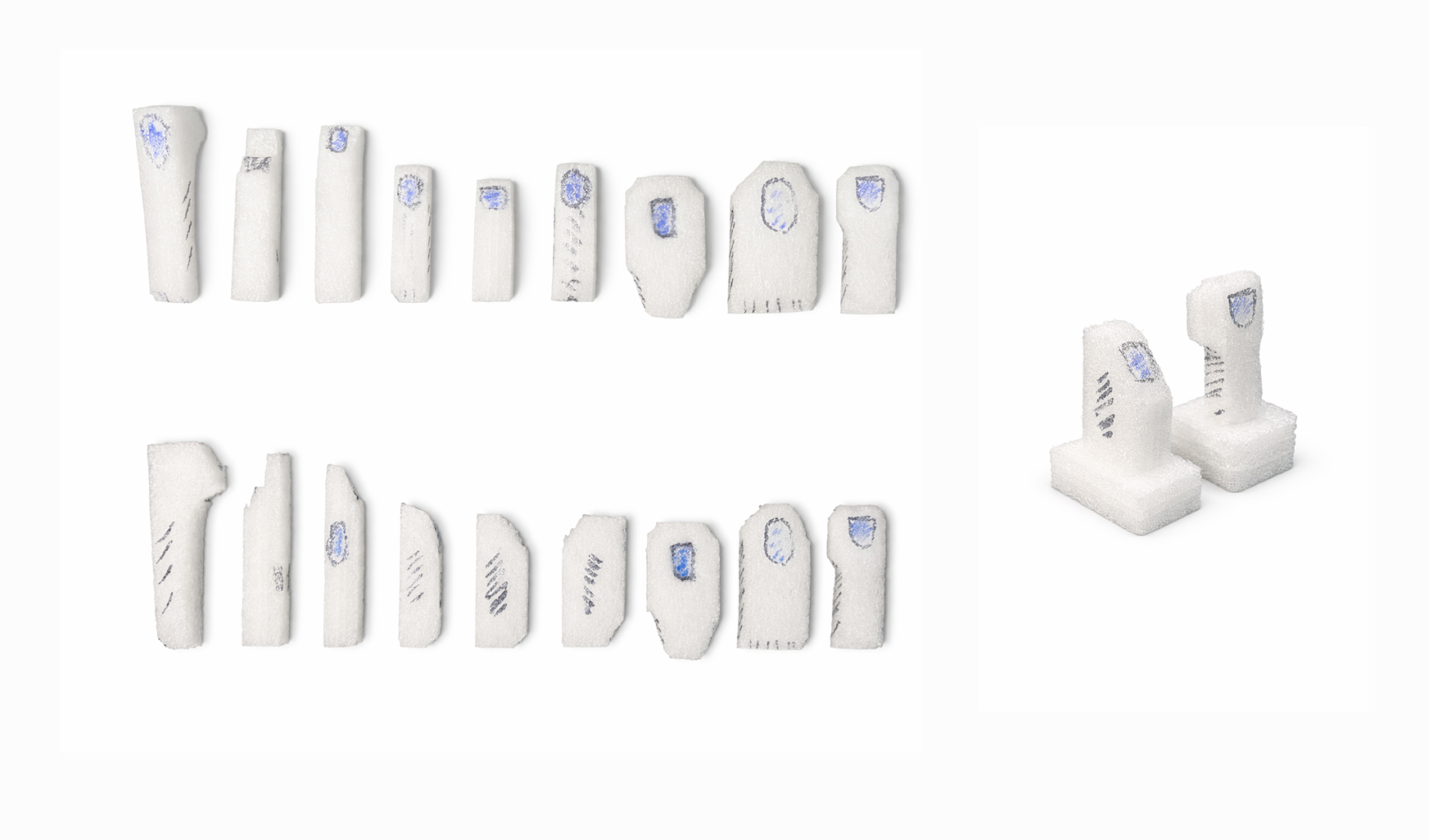
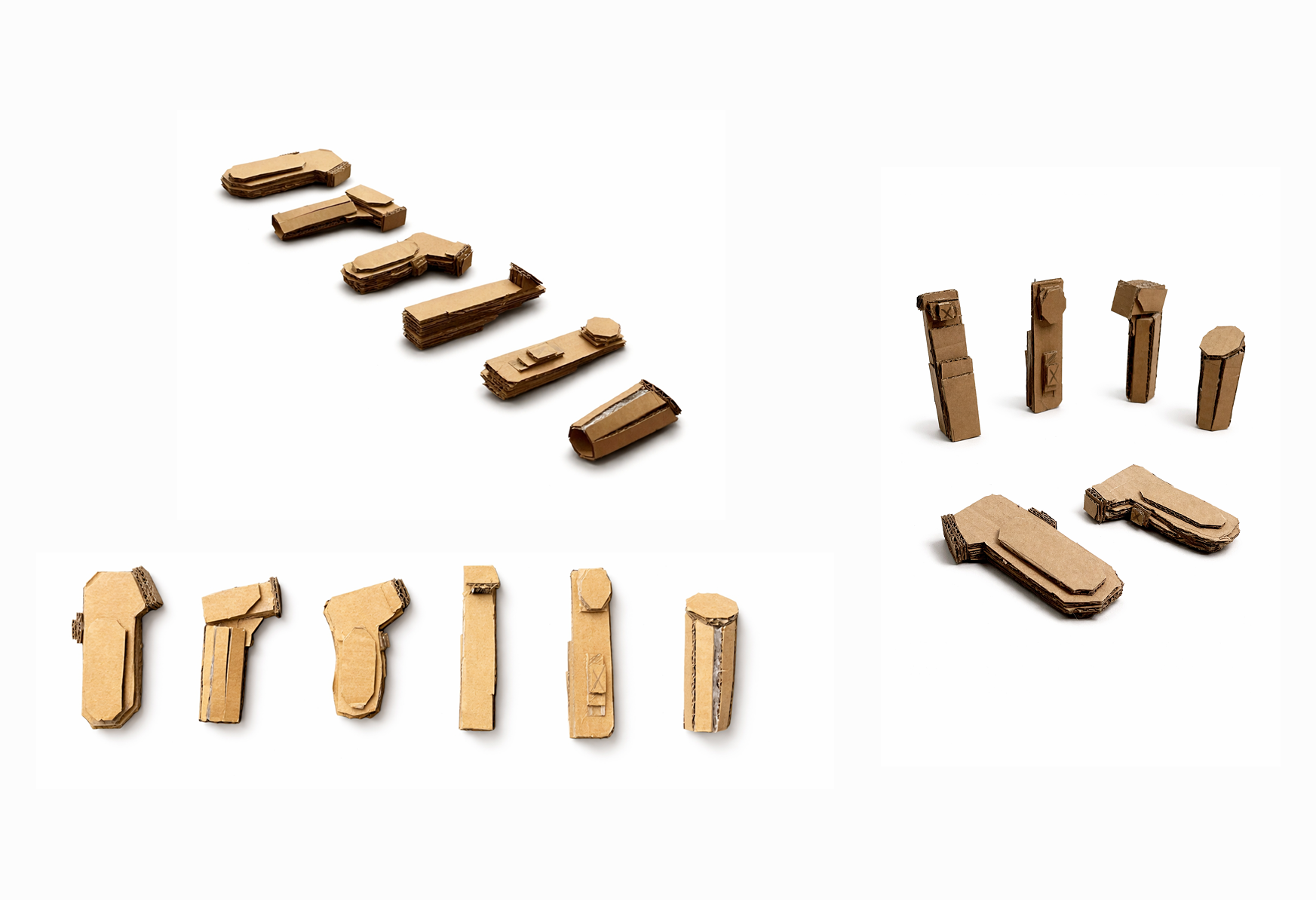
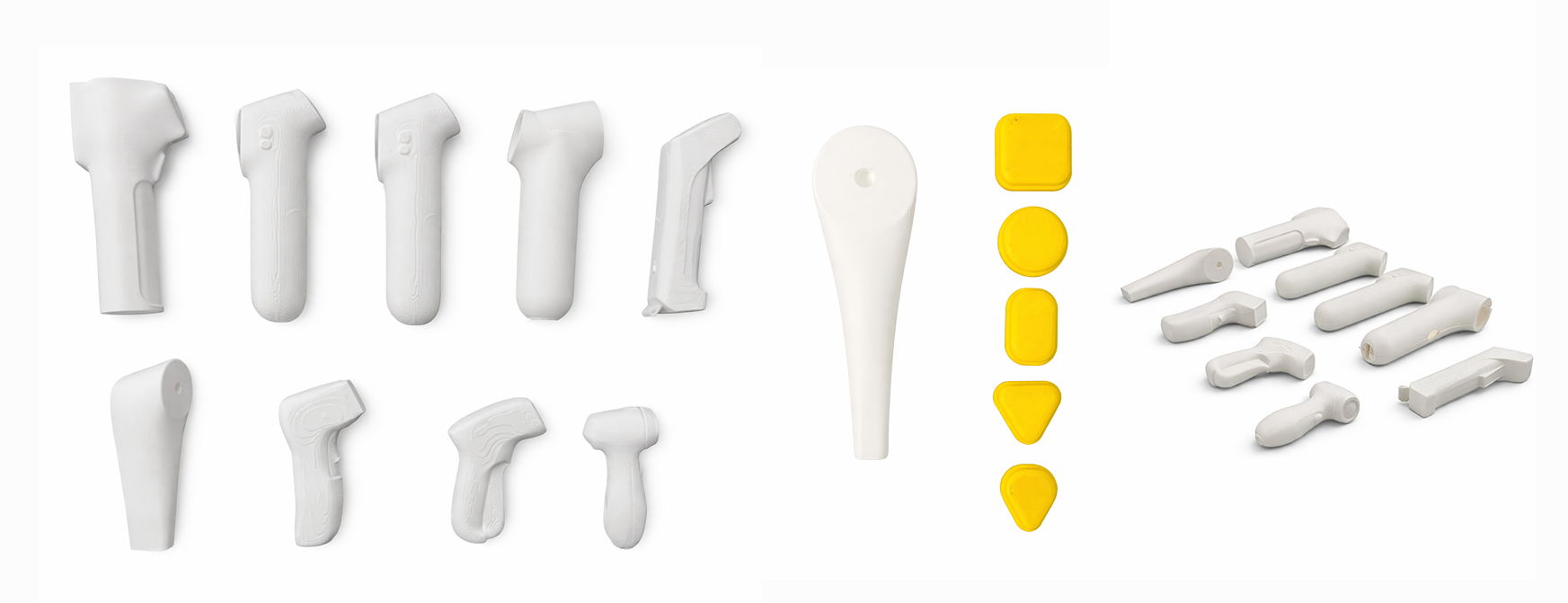
From foam to final
Foam models Cardboard models 3D printed prototypes
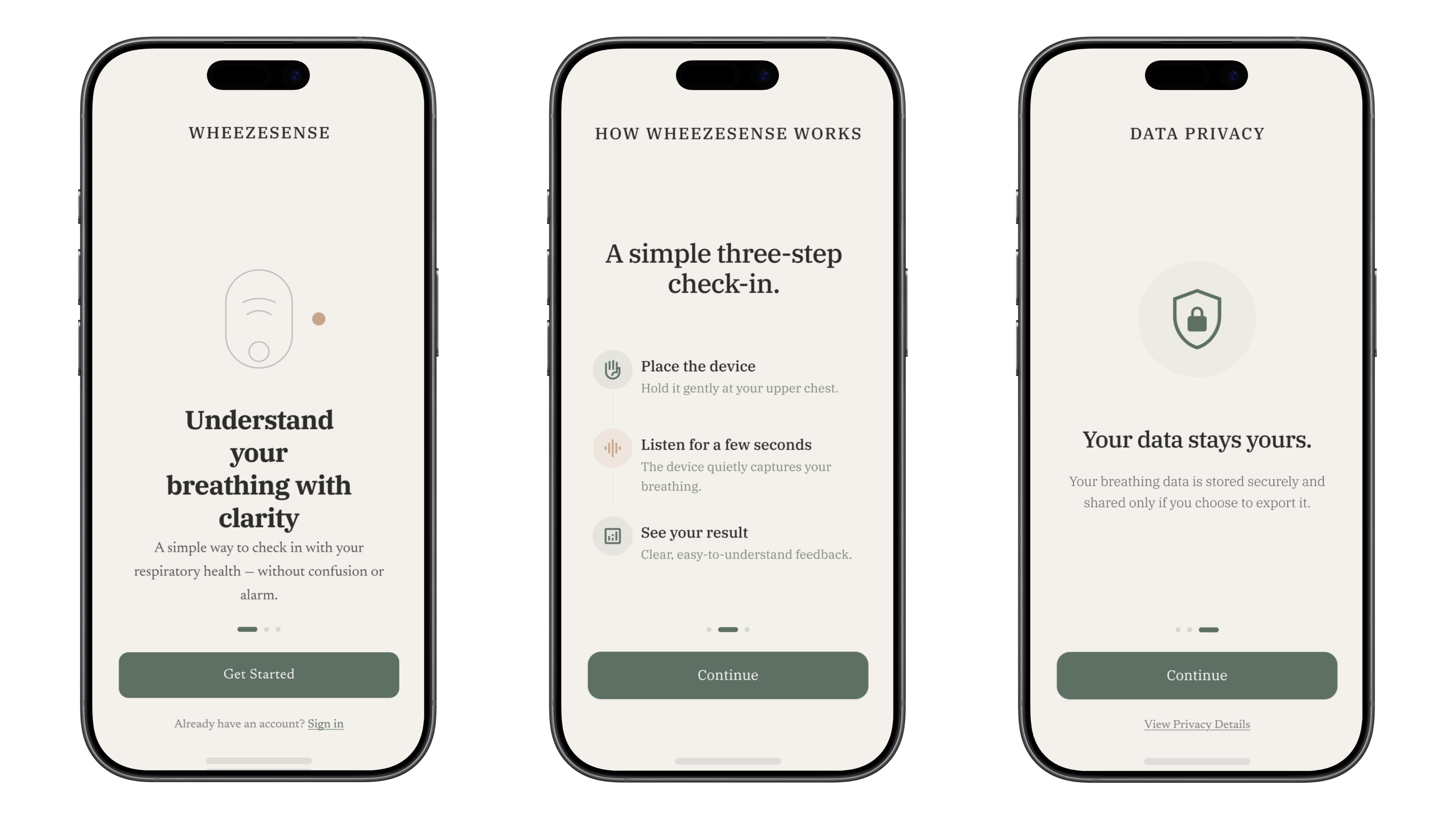
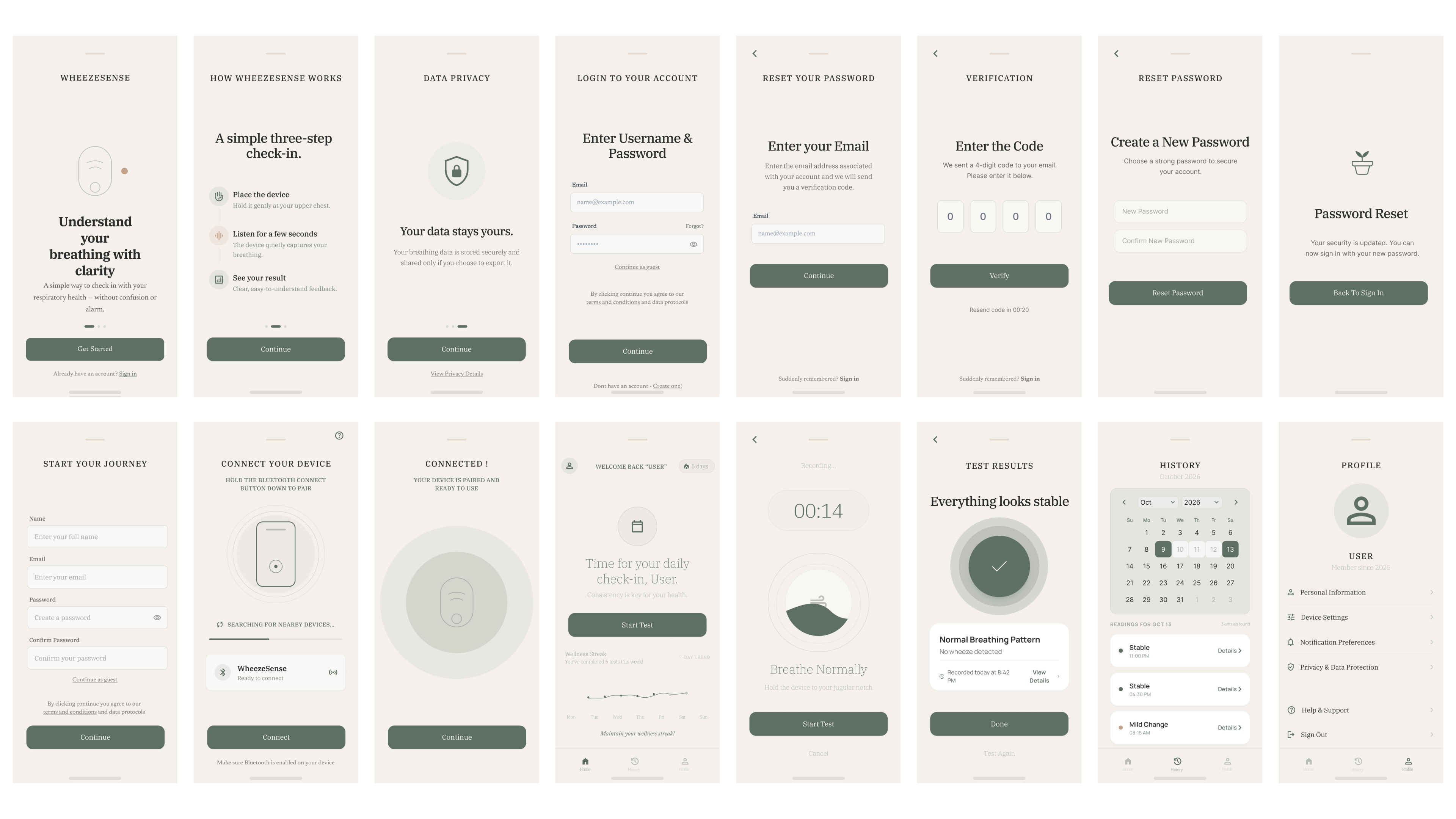
App preview, colour & type, wireframes
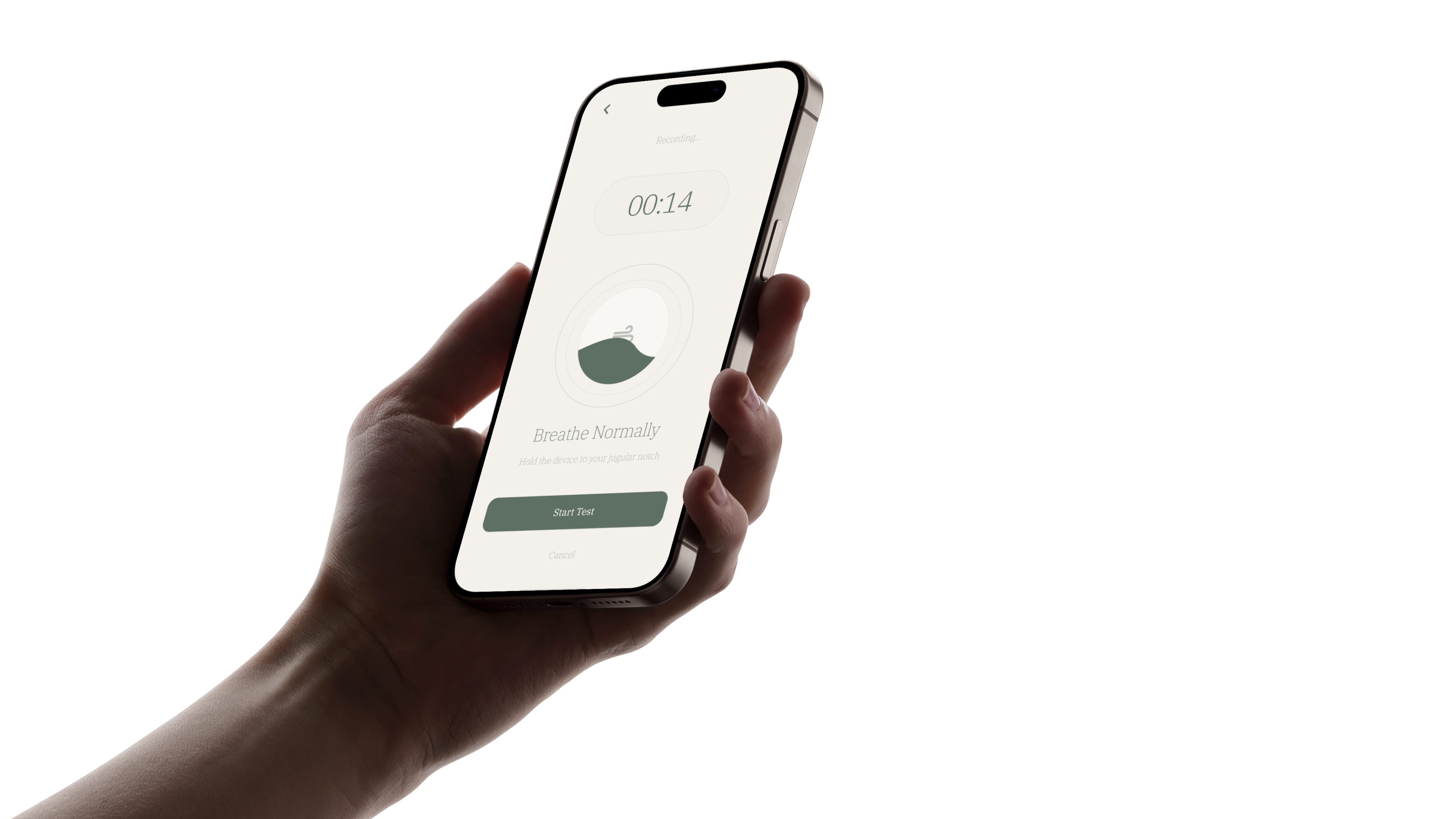
App Preview
App preview
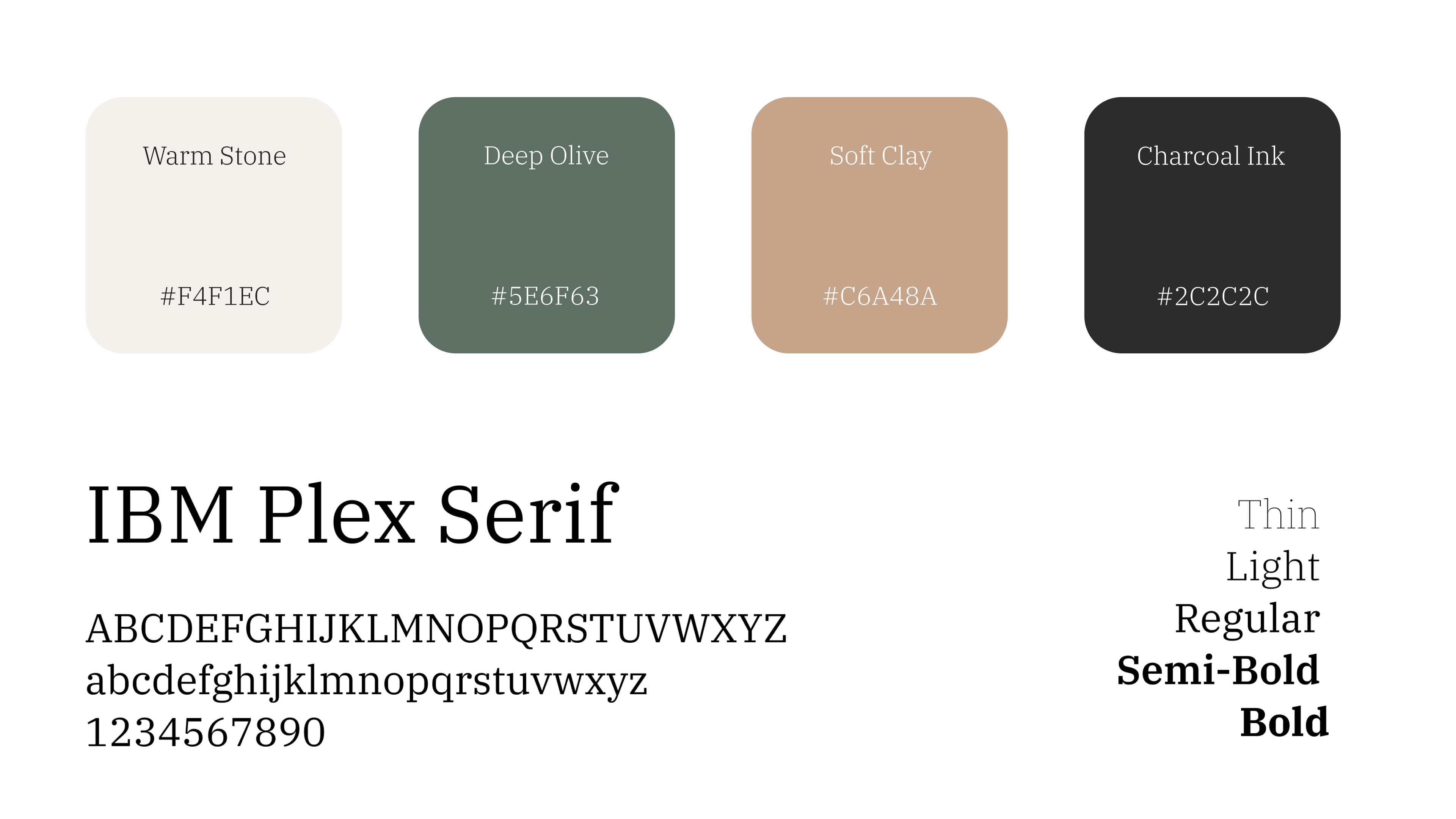
Color & Typography
Colour and typography
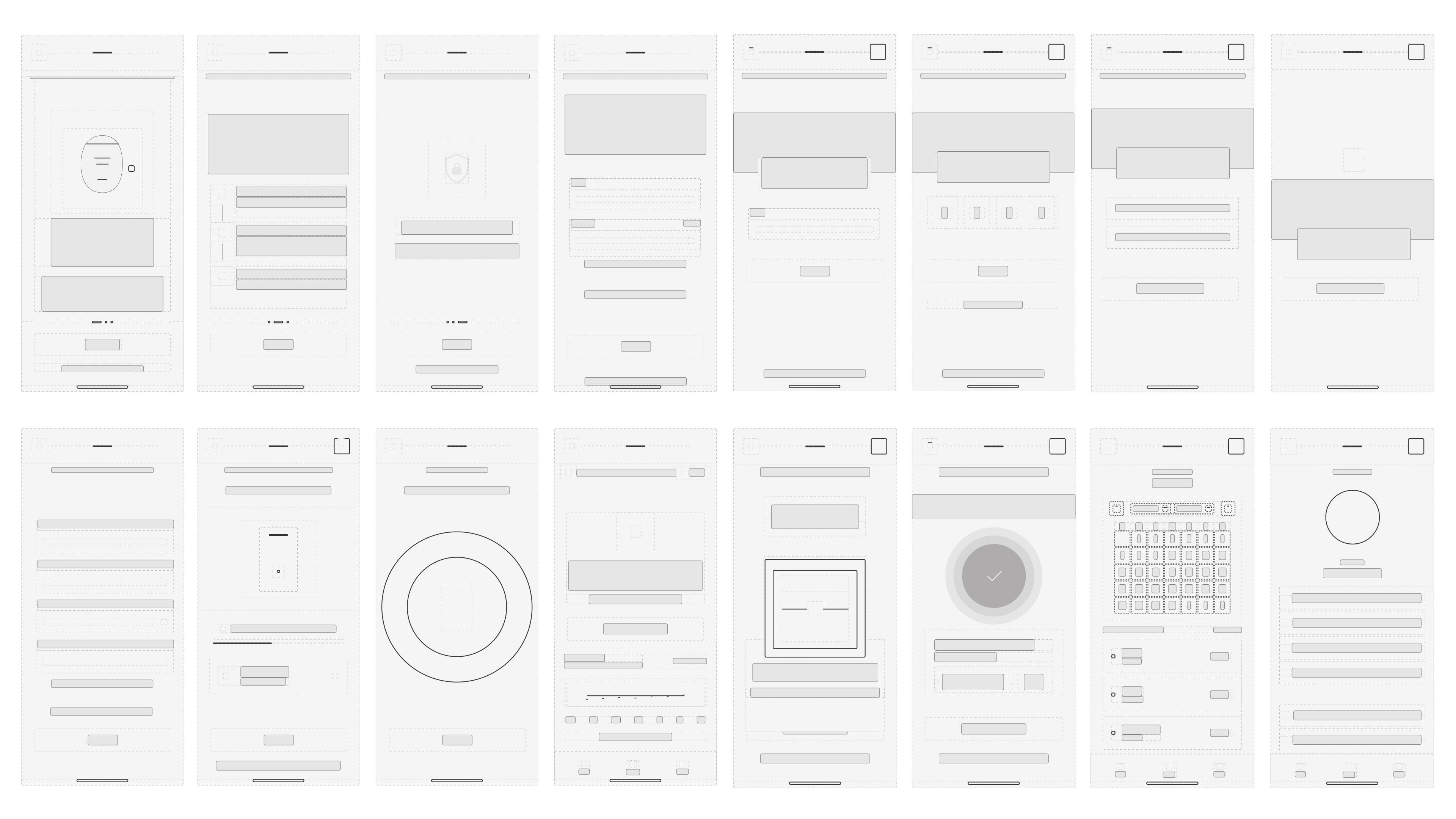
Wireframe
Wireframes
Lo-Fi Prototype
Lo-fi prototype
Figma prototype
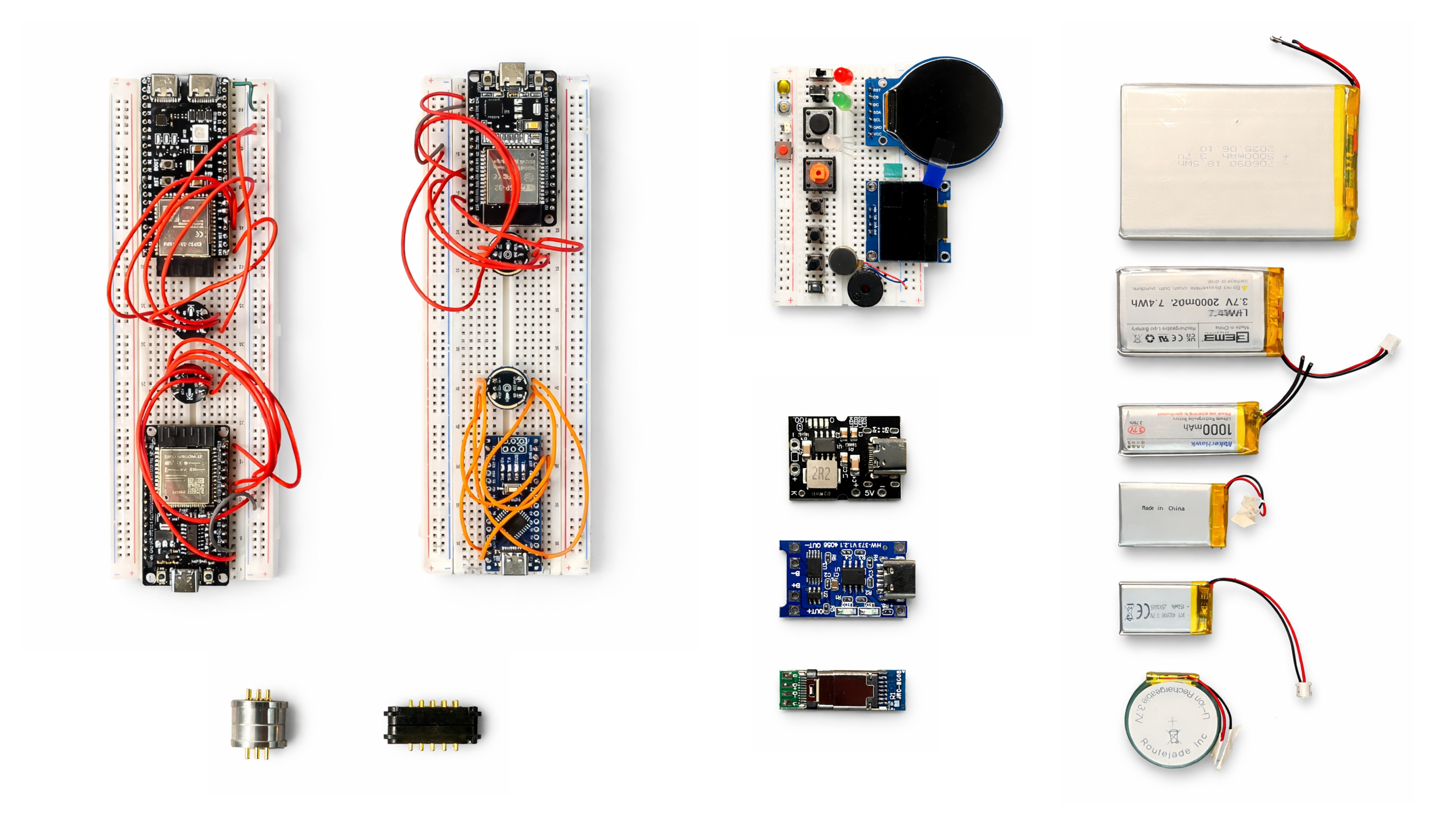
Electronics testing
Electronics testing
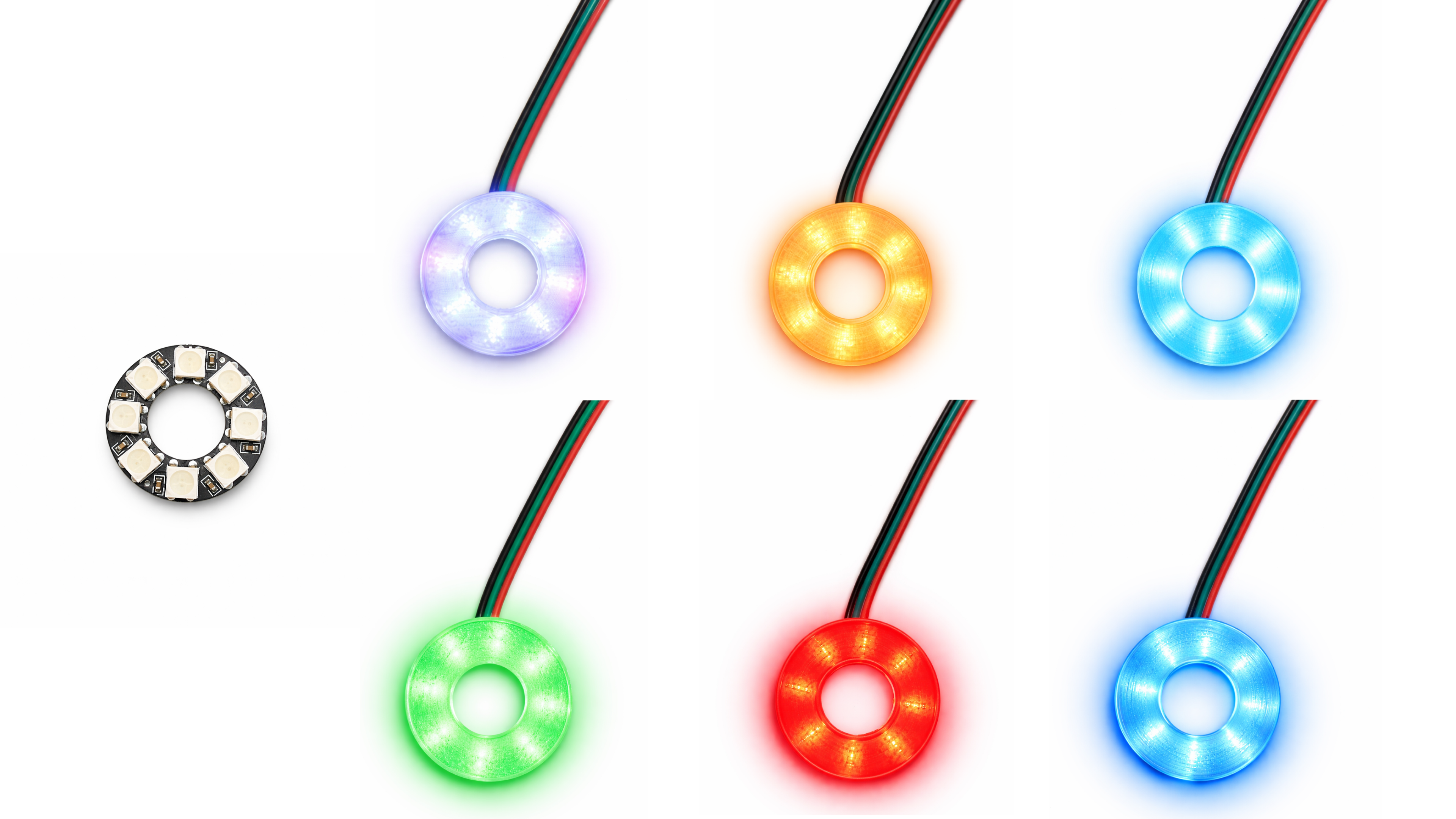
Ring light testing
Ring light testing
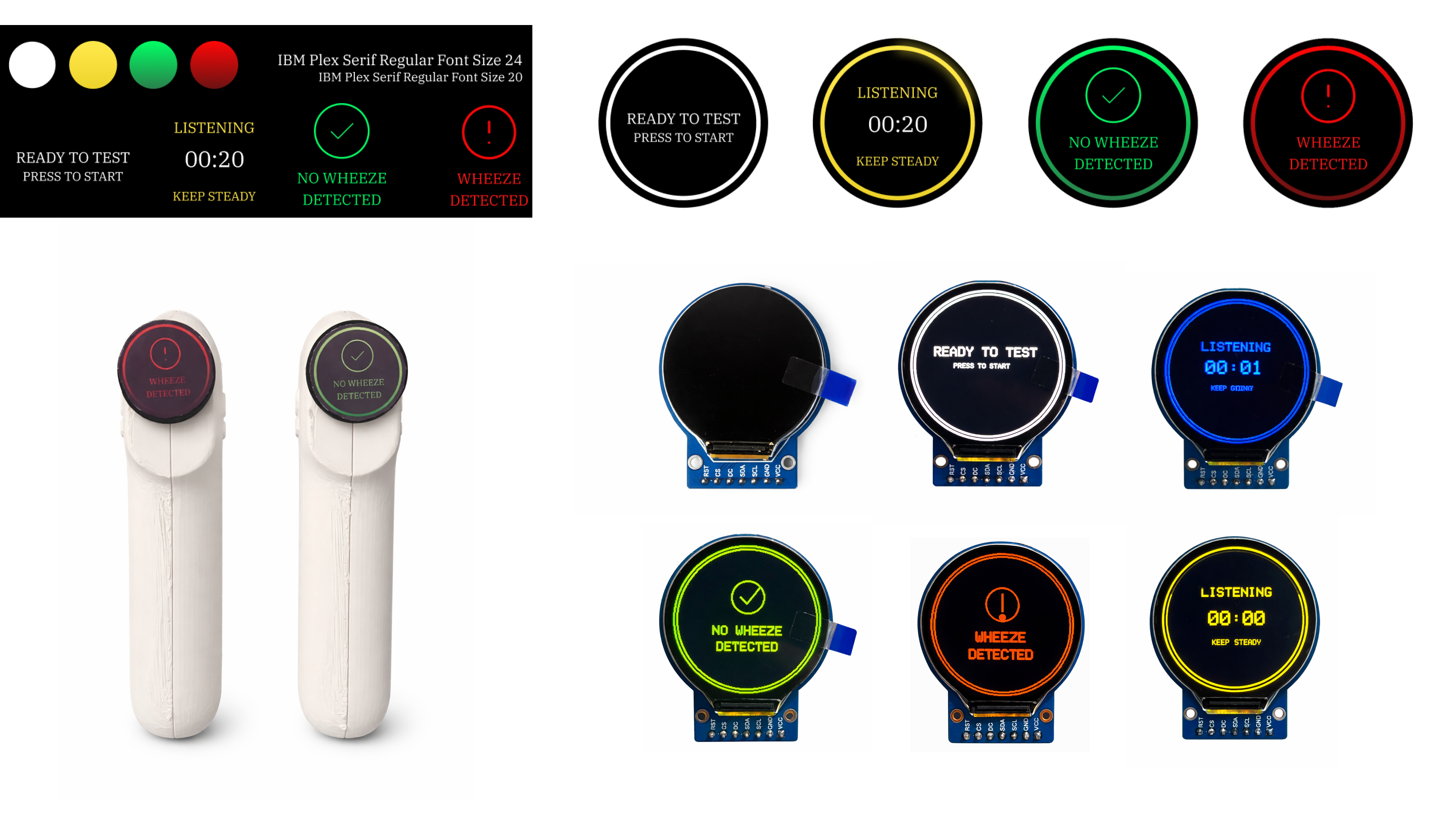
LED screen testing
LED screen testing
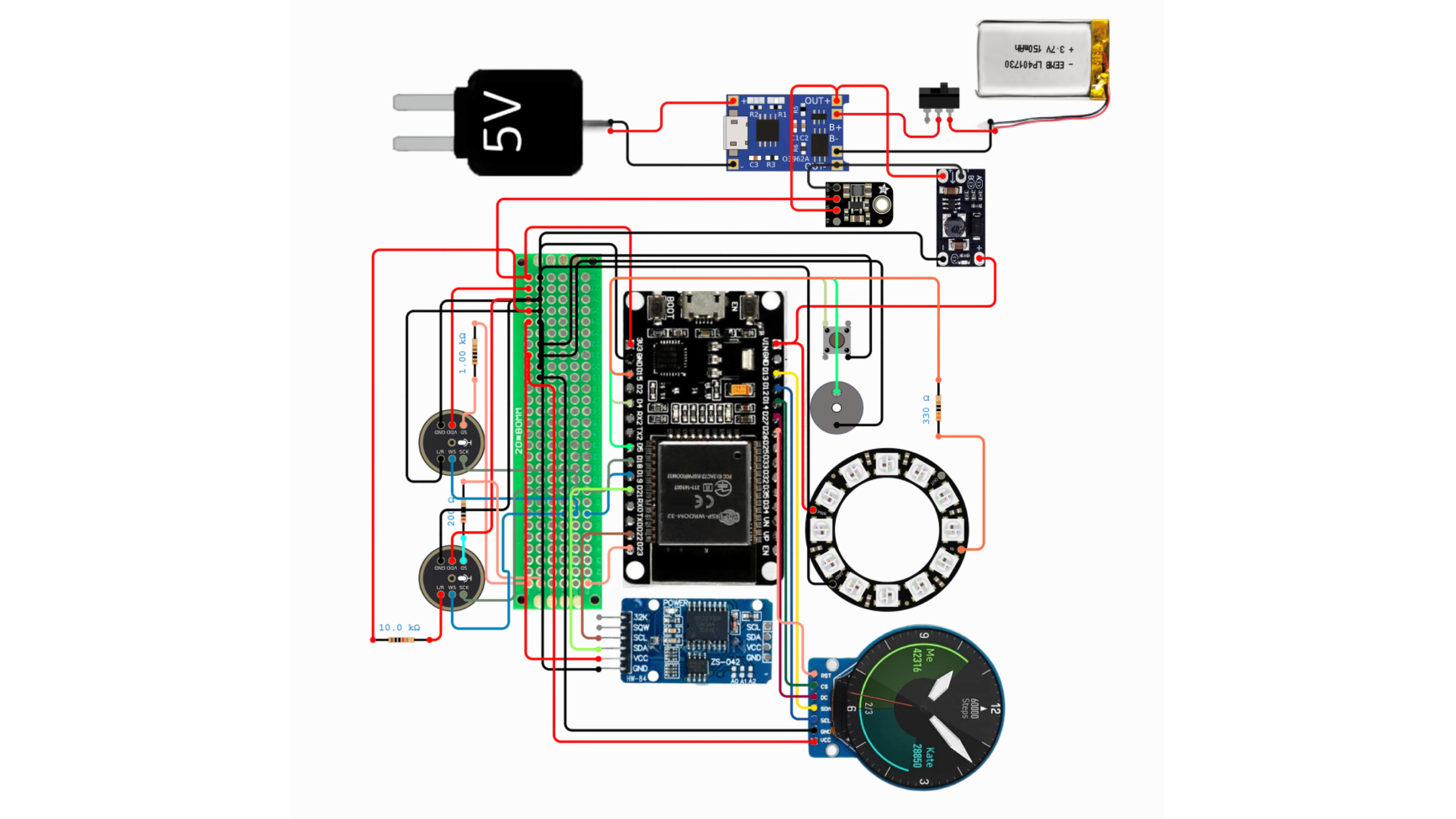
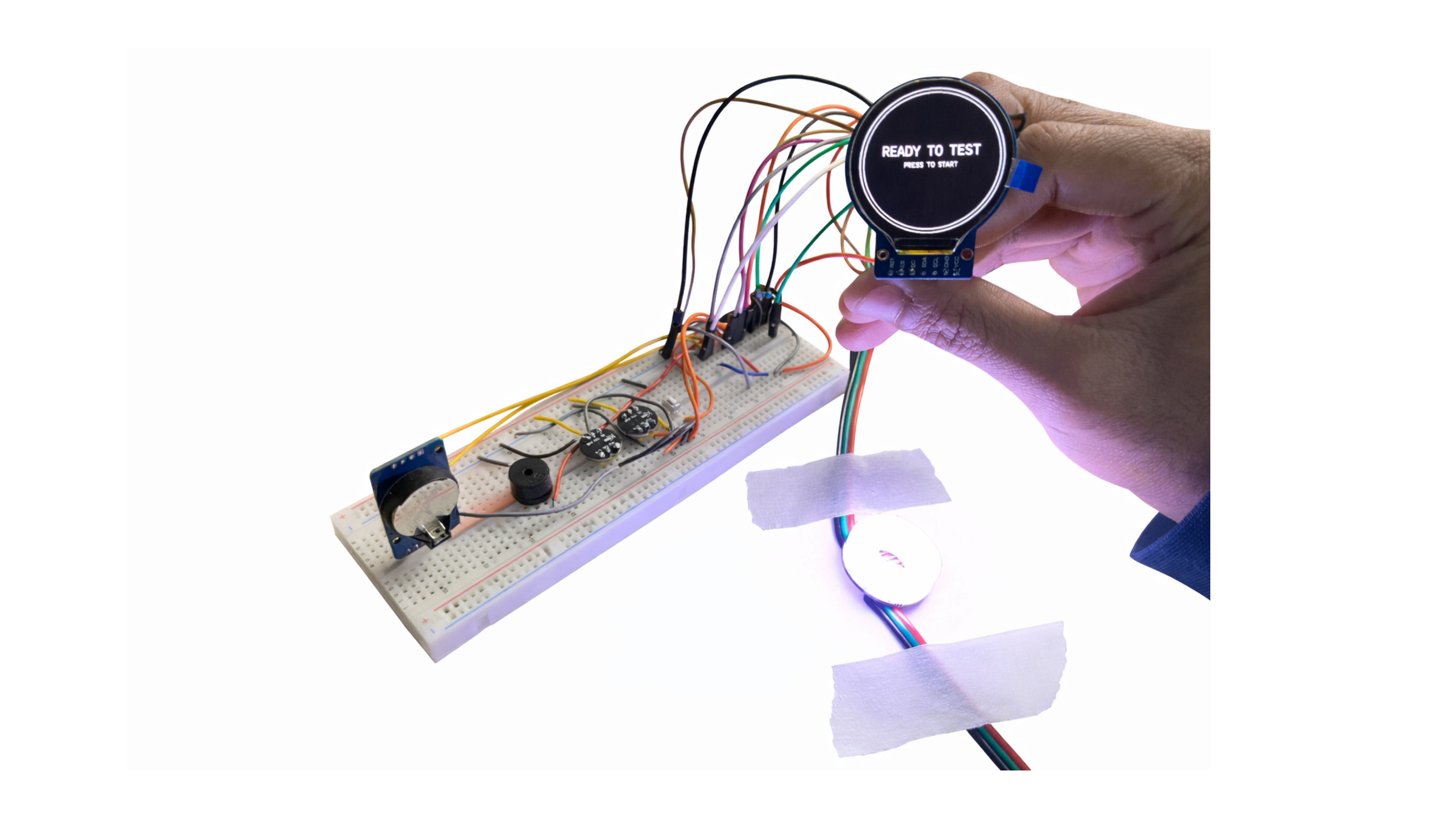
Fritz diagram & breadboard prototype
Fritz diagram Breadboard prototype
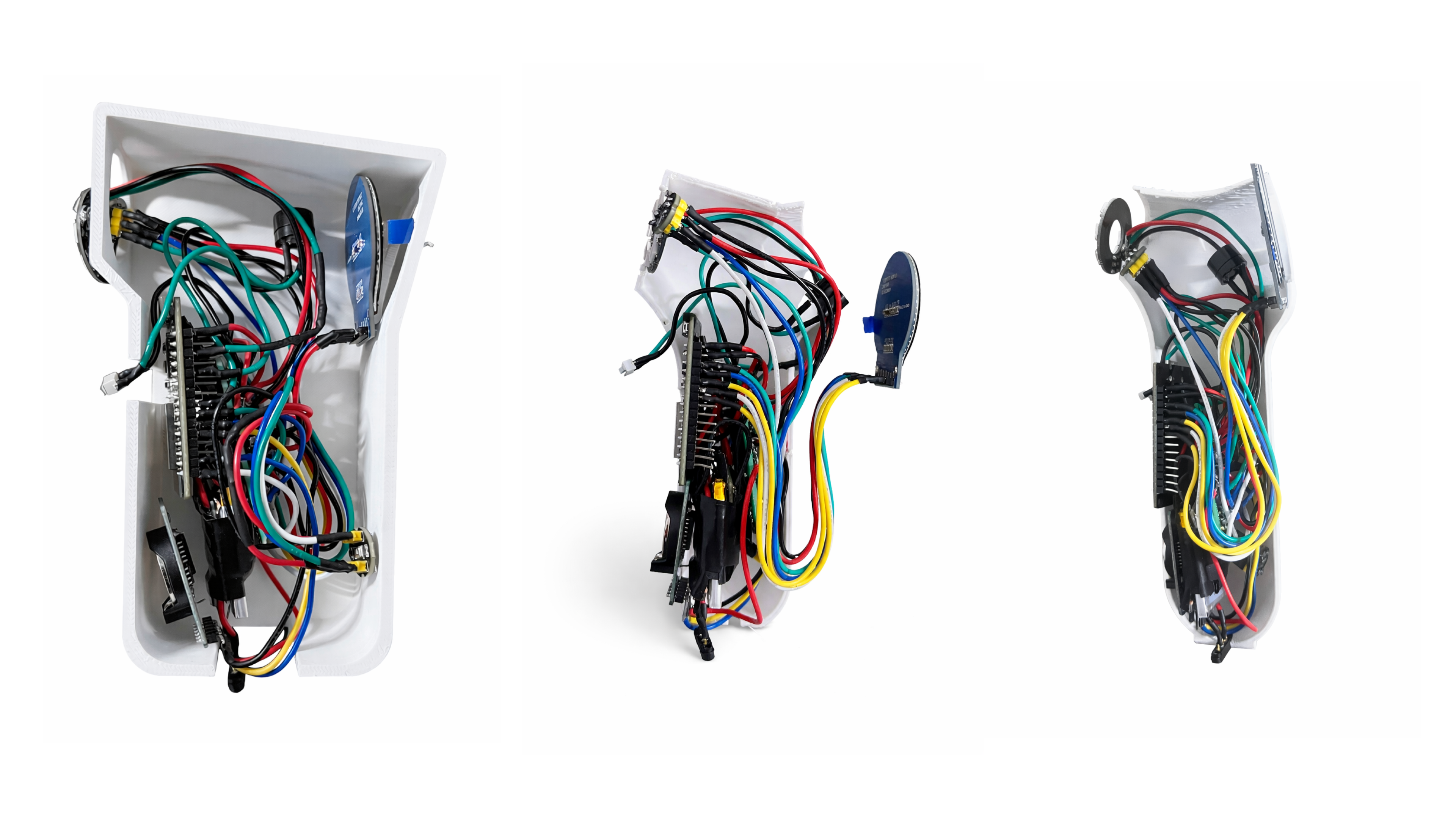
Circuit fitting
Circuit fitting
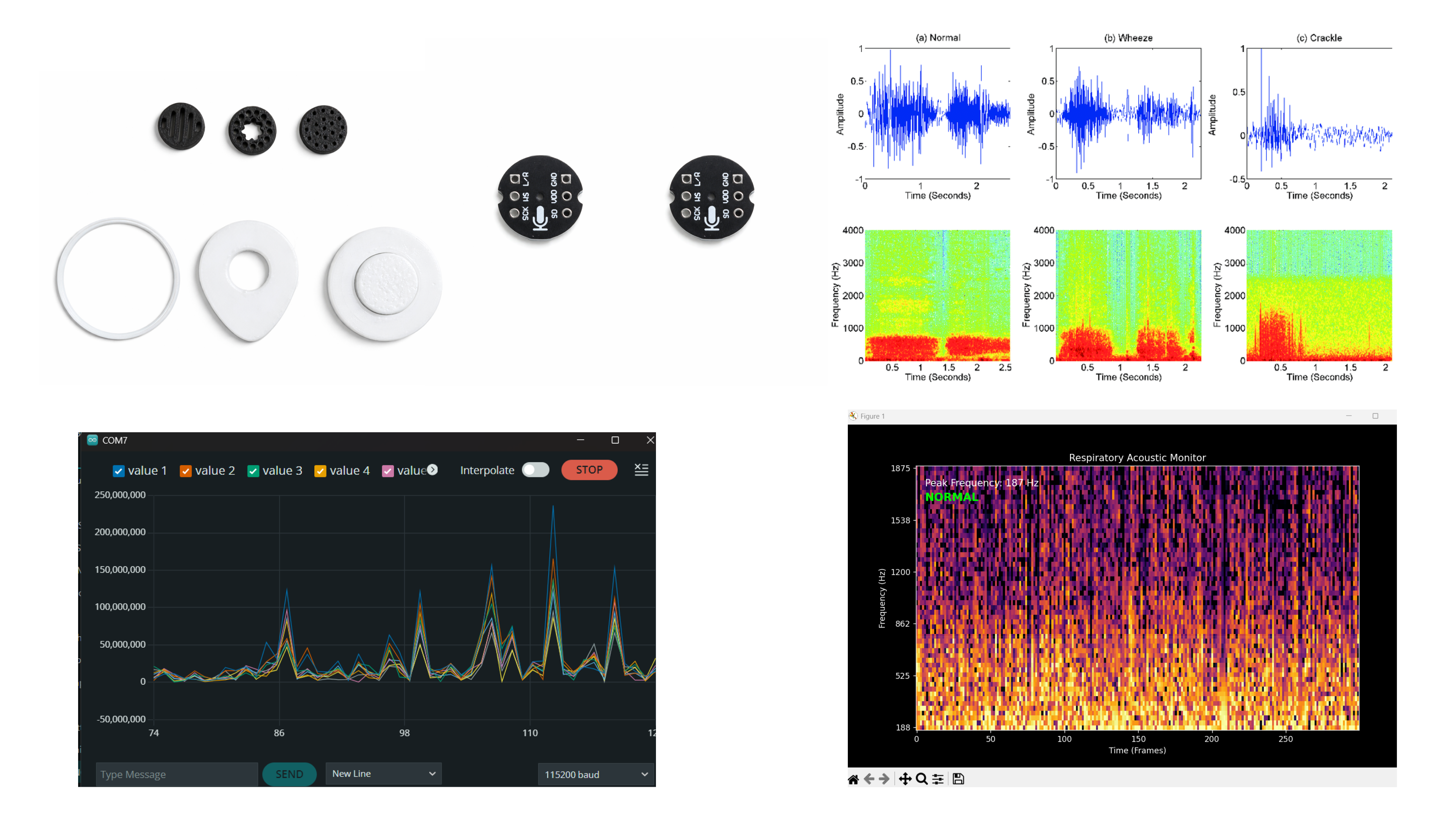
Microphone testing
Microphone testing
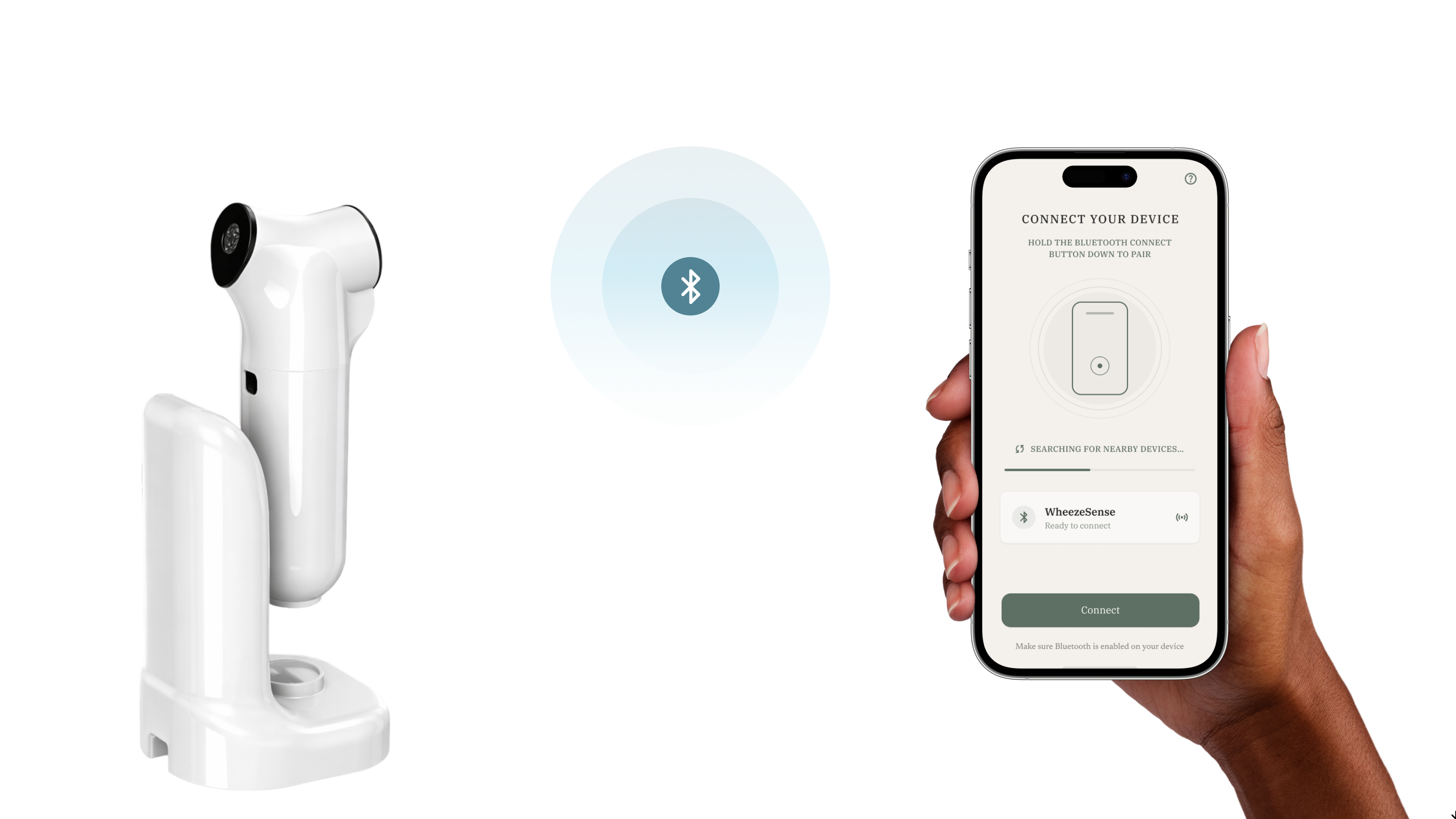
WheezeSense
Final render 1 Final render 2 Final render 3 Final render 4